by Bernard McCormick Tuesday, May 01, 2012 No Comment(s)

The recent news of Secret Service men enjoying the company of working girls while protecting the president in South America is being viewed as the low point in the history of the service. Hardly. When President John F. Kennedy was assassinated on Nov. 22, 1963, the Secret Service men charged with protecting him might as well have been arm wrestling with Dallas hookers. They weren’t there when a president was murdered.

Among the strongest evidence that it was a government conspiracy, not a lone nut, that assassinated JFK, is the shocking absence of security during his visit to Dallas, known to be one of the more hostile environments for the president at that time. Few knew of the lax security at the time, and those few were either security agencies themselves who knew normal precautions were absent, or the plotters who took pains to make certain it was that way.

Although ignored by the original Warren Commission we now know, through witnesses who have come forth over the years, reinforced by declassified documents, that the Dallas police and local sheriff’s office, units which normally are out in force for a presidential visit, and especially for a motorcade, were not present in the usual numbers that day. There were no snipers on rooftops near Dealey Plaza, no one checking to see if guns were peeping out of windows. And, despite the fact that a number of witnesses, including a police officer, immediately after the shooting encountered men with Secret Service credentials, there were no Secret Service men on the ground at Dealey Plaza. The identification shown was false, by obvious members of the assassination team.

An excellent account of the security situation is found in James W. Douglass’ book JFK and the Unspeakable, which in turn relies on the work of numerous researchers. Those researchers include Gaeton Fonzi, whose landmark book The Last Investigation first appeared as articles in Gold Coast magazine in 1980. One glaring example of lax security was the fact that the president’s motorcycle escort, which normally rode beside his limousine, thus providing some shielding from potential attackers, was ordered to follow the limousine. Also, there were not Secret Service agents riding in the back of the president’s car, which might have saved him. The initial explanation, one given to the Warren Commision, was that the president wanted it that way, but over the years Secret Service people have said the president made no such request. He never interfered with their advice. That change in routine came from Washington, either from the Secret Service or someone controlling the Secret Service. Interestingly, just the day before in Houston, normal security had been in place.

The route of the motorcade was incredibly careless. The slow turn at Dealey Plaza seemed designed for a hit, providing an easy target for gunmen in a building or behind the grassy knoll. A vigilant Secret Service would never permit that. At the least, the place should have been swarming with security. Almost none existed.

The Secret Service did strange things after the murder. The Dallas coroner wanted to keep JFK’s body there for an autopsy. That would be normal procedure by Texas law. But Secret Service men (real ones this time) literally pushed his body past the coroner and left the hospital. After failing to do its job in the motorcade, it took on a job that was not its work. It was subsequently learned that the autopsy back in Washington was also controlled, and photographs of the president’s wounds altered to make it appear he was shot only from the rear – necessary to set up the lone gunman theory.

This is not to suggest that Secret Service agents guarding the president that day were part of the conspiracy. One of them, Clint Hill, became famous by racing to the president’s car and pulling Jackie Kennedy back from the top of the trunk. The men guarding the president were following orders, but it is an inescapable conclusion that someone high up the Secret Service, or even above that agency, was part of the conspiracy to murder a president, even if the overall plan likely involved high-ranking military, other government agencies and some organized crime elements, all coordinated by elements of the CIA.

The recent prostitution incident may not be the Secret Service’s finest hour, but it is a long way from its worst.

by Bernard McCormick Tuesday, April 24, 2012 1 Comment(s)


It was considered one of the wonders of the social world when two years ago the Fort Lauderdale Historical Society’s dinner honoring Wayne Huizenga as “man of the centennial” sold out without invitations being sent. The Ritz-Carlton even had to use the dance floor for extra tables to handle the demand.

Well, it just happened again. The Historical Society’s Friendship Luncheon did not require invitations when word spread that Monsignor Vincent Kelly would be the honoree. Last week the Lauderdale Yacht Club needed to use everything but the swimming pool to accommodate the 222 people who attended. It would have been more if room permitted.

It was a tribute to one of the most influential religious leaders in the history of South Florida. The Irish-born Kelly has been here in the Archdiocese since 1969 and built Fort Lauderdale’s oldest Catholic high school, St. Thomas Aquinas, into an institution with a national academic and athletic reputation. This is the school which produced Brian Piccolo, Chris Evert, Michael Irvin and numerous others who made it to the professional sports level. It also ranks annually among the area’s best in National Merit Scholars.

It took his longtime St. Thomas associate, retired principal Sister John Norton, several minutes just to list his additional achievements. They included being pastor of St. John the Baptist Catholic Church in Coral Ridge and supervising principal of Cardinal Gibbons High School, where Fort Lauderdale mayor Jack Seiler, one of the speakers at the luncheon, went to high school. He also served until recently as vicar of education for the Archdiocese of Miami, in which capacity he made perhaps his most lasting contribution – the Archdiocesan Education Foundation, which is now part of the Catholic Community Foundation.

The endowment concept was pioneered at St. Thomas Aquinas in the early 1980s. Shortly thereafter Monsignor Kelly took it diocese-wide to serve what has become more than 70 schools in the Archdiocese, with the purpose of holding Catholic education costs down at a time when members of religious orders, once the overwhelming number of Catholic school teachers, were declining rapidly. They had to be replaced by lay teachers who required living salaries. Endowments vary widely from school to school but after almost 30 years the total fund has been reported at around $100 million.

Monsignor Kelly, known for his communication skills, was typically entertaining, thoughtful and relevant in remarks.

The luncheon was one of the first official duties of the new president of the Historical Society, Elton Sayward, who took over for Dr. Harry Moon. Sayward is chief operating officer of Gulfstream Media Group, which publishes Gold Coast and nine other magazines in a market from Broward County to the northern Treasure Coast. He and Gulfstream Media Group president Mark McCormick go back to 1988 when McCormick was a newly minted U.S. Navy ensign and served with Sayward on a guided missile frigate based in Philadelphia. Sayward joined the Navy as an enlisted man, and already had 10 years service. He retired as a commander in 2007 after 30 years. He has had a busy month. In addition to planning the Historical Society event, he is involved in the Navy League's and the Navy Days' participation in the revived Lauderdale Air Show.

by Bernard McCormick Tuesday, April 17, 2012 1 Comment(s)


The cost and inefficiency of government has been much in the news in recent years. Whole cities in California have bellied up when they could not meet the cost of salaries and benefits to public employees. The federal government’s Medicare program has been so abused that people now consider Medicare half a word. The other word is fraud. This has been especially embarrassing in South Florida, where the government does not catch up with scams until it is too late and the culprits have escaped to foreign lands, where most of them started out. By the time a scam is exposed and remedied, the bad guys have come up with something new to enjoy a second round of thievery. The problem is so serious that people are running for president to try to cure it.

Of course, not all of this is illegal. The pension abuses go with many jobs. Some public sector employees retire young with almost as much as they got paid. Some people game the system brilliantly, retiring with all kinds of bonuses, only to unretire a month later in a similar job, or the same job in the next town. These problems are being addressed, but not very quickly because people enjoying these perks tend to vote, and vote for people who will keep the game going.

Yesterday’s paper reports the fake accident game goes on. People driving beat-up cars deliberately create minor accidents. It happened to my daughter. A car filled with people, probably illegal, who don’t speak English, barely taps her car, which is on my insurance. Our car isn’t damaged. The other is already a wreck. Nobody hurt. Then the crooked lawyers and doctors bill insurance companies for services not needed or even rendered. This was more than 10 years ago, and the game goes on. When lawmakers shut down one scam, the same people come up with another.

There has to be a faster way to reduce government costs, and I just came up with it. The Sun-Sentinel reported Broward’s new medical examiner makes $240,000, joining the “The 200,000 Club.” Others in that club are the county administrator ($290,000), aviation director ($257,000), port director ($250,000), attorney ($240,345) and auditor (200,000). That’s well over $1 million. I propose we turn all these jobs over to my firm, McCormick, O’Goniff and Craven. It isn’t a law firm, but we can hire lawyers. They are all broke and will come cheap. I will immediately cut these county job salaries by one-third.

I realize people filling these jobs are highly skilled, but no public servant should make that kind of money. Indeed, a public servant should be just that. Work for free, but that is not realistic in this market. More realistically, I will take the aviation job for $200,000, saving the county $57,000. I know something about aviation, having once jumped out of airplanes. I also know that the Douglas A-20 Havoc ceased production on Sept. 20, 1944. I bet our director doesn’t know that. I bet he doesn’t know it was my eighth birthday, either. Anyway, I will find a highly qualified person willing to do that job for $150,000, and pocket the other $50,000.

As for county attorney, I personally know at least two who already do that kind of work. Neither has ever been indicted. I’ll bet we get them for a buck and a half, providing they can keep their day job. I’ll take $50,000 for the firm. Port director may be tougher, although I was a coxswain on my high school crew and was one of the best on the Schuylkill River until one summer I grew a foot and gained 50 pounds and the coach threw me in the back of boat and gave me an oar. That was a lifestyle change that I never got over.

But I could get over this lifestyle change pretty easily, especially if my political friends would give me a deal in which I could retire in a month, get hired back in 90 days and hire public servants all over again. This time we would work the $150,000 club. Our fees, of course, would be commensurate.


by Bernard McCormick Tuesday, April 10, 2012 8 Comment(s)

Not long before he retired, Jimmy Breslin went on a dog crusade in New York. He was offended by people walking dogs on busy streets, scooping up their offerings, and then getting on a crowded subway with their fingers wrapped around a pole an inch from his nose. He proposed throwing dogs in front of subways, justifying it on the grounds that dogs have no souls.

He followed up with a column saying that when he attacked the Catholic church for sheltering pedophile priests, nobody cared. When he accused the president of the United States of being a liar and killer of young soldiers, nobody cared. But when he suggested dogs be thrown in front of subways, all hell broke loose. New York went crazy.

A recent blog reminded me of Breslin’s complaint. Normally my blogs get no response. We assumed nobody read them because in a year of almost weekly blogs we might get half a dozen comments. But this particular blog got 11 responses – published last week – all of them negative. Rush Limbaugh never had it so good. The subject of the blog was gun control, relating of course to the shooting of a teenager in Sanford by a neighborhood watch volunteer. The blog was a combination of silly and serious, opening with an absurd few grafs about a traffic confrontation in which I would have hung a guy with piano wire for cutting me off. That’s the reason I keep a piano in the trunk of my 20-year-old sports car. But then I figured a nutty driver might be carrying a loaded pistol, and I went home to bed. People accustomed to my stuff found it amusing. But none of the comments saw it that way. One writer used the word “irony” – that’s a close as anybody came to the spirit of the nonsense I wrote.

I also ridiculed Revs. Al Sharpton and Jesse Jackson for jumping on the civil rights bandwagon, because they had to protect their speaker fees by keeping the publicity going. None of the writers cared about that. What they cared about – their dog in front of subways – was the suggestion that Florida gun laws are insane, with the NRA constantly pushing for anything that sells guns, and against anything that might cut into profits from firearms, resulting in 900,000 people in Florida having permits to carry concealed weapons. Well, that provoked the reaction.

Feeling rejected, I went to a pub where I encountered a stranger, who turned out to be a lawyer. When the subject came up, he told me he had been a member of the NRA, had actually carried a concealed weapon on trips to certain neighborhoods, but never came close to needing it and eventually decided to leave the weapon at home. He now favored gun control, at least handgun control, and even quoted the Second Amendment, which begins: “A well regulated Militia, being necessary to the security of a free State, the right of the people to keep and bear Arms, shall not be infringed.” Not too many people can quote the Constitution with such accuracy.

He said it was clear to him that the Founding Fathers were thinking of the right of a government to have a militia. He pointed out that when the Constitution was written, oppression by England was fresh in mind, and states were much more independent, and were sometimes dominated by religious groups. He felt it was obvious the framers felt a state had a right to protect itself from another state, or another country, which might try to dominate it. He did not think the Second Amendment had anything to do with assault rifles in the hands of anybody who wanted one. He said a good deal more, criticizing legislators who say they favor gun control, then justify voting against it by nitpicking the wording of legislation.

Later, at the same place, I asked a native Irishman if his homeland still had strict gun laws. Yes, he said, even the cops don’t carry guns, except in special situations.

“It’s a good thing, too,” he said. “Otherwise there would be a lot of dead people. This is how we settle things.”

He held up a fist.


by Bernard McCormick Tuesday, April 03, 2012 13 Comment(s)

The recent publicity over Florida’s Stand Your Ground law was fresh in mind as I drove at normal speed along a busy Broward County two-lane boulevard, which was about to narrow to one, just a block from where I would turn off for home. A large SUV was coming up fast behind me, desperate to pass, but I knew the driver was stuck because the road was narrowing, and to pass on the right was clearly illegal, and in a few yards would be impossible for lack of paved road, but that was exactly what the driver did, accelerating over the no-drive stripes to barely get by, going about 50 in a 30 mph zone. Had I not slowed, he might have clipped me as he veered back to the left in front of me.

I gave an angry blast of my horn. Had I not been thinking about the Stand Your Ground law and the fact that 900,000 people in Florida are licensed to carry concealed weapons, I would have overtaken the SUV, blocked its path, jumped from my car, dragged the driver out, subdued him with karate chops, and strung him up with piano wire from the nearest tree. I carry a piano in my trunk for such emergencies. I would do all this in 10 seconds and leave the driver to die and rot, twisting in the air – much the way the British sometimes treated Irish rebels in days of yore. It would be a reminder to other insane drivers not to mess with me. I would leave the scene, making sure to turn off the SUV engine to conserve fuel. No one would see me because I would have also sprayed myself with the stuff that makes you invisible. Potential witnesses would only report seeing a small white sports car with no driver and a piano in the trunk.

But that was before I read all the articles about people all over the country killing people they don’t like and getting away with it because all judges have to hear is that the killer felt threatened by the killee. As I processed these thoughts, I realized that any driver who did such a stupid, dangerous thing just to get in front of one car was probably crazy enough to have a gun, loaded, safety off, sitting on his lap. And very likely his vehicle was filled with assault rifles and high explosives, and the next thing the judge would be hearing that he blew this guy away because he was just minding his business, driving like a maniac, when he felt threatened by a mad man whom he had cut off and was probably out to kill him. Thinking that, I turned off onto the quiet street where I live and therefore lived to live another day.

These thoughts are occasioned, of course, by the killing of a black teenager in Sanford, Fla., by a volunteer neighborhood watch fellow. It has led to the usual suspects coming to Florida to participate in rallies demanding justice. But you can’t blame the Revs. Al Sharpton and Jesse Jackson for jumping on the bandwagon. Civil rights is their livelihood and if they did not show up at highly publicized events it could hurt their speakers’ fees. Nobody wants that in this economy.

But nobody wants Sanford’s reputation damaged either, and talk about boycotting businesses there is nonsense. Our family feels an emotional attachment to Sanford, for since the 1970s almost every year we have gone there to catch the Auto Train north. To be truthful, what we saw of Sanford for years was not impressive. The main road is lined with fast food places, shabby shopping centers and old fashioned squirt-it-yourself car washes. It seemed pretty rednecky. But that changed in recent years when we arrived early for the train and killed time by checking out its redeveloped business district. It’s a beautiful few blocks, brick streets with book stores, nice restaurants and gift shops, and a lot of history. That goes back to the time when ocean going ships could make their way through rivers and lakes to the central Florida town. It was once a busy port, calling itself a gateway city. It shipped more oranges than any other town. It also had in the late 1800s a spectacular fire which wiped out practically the whole business area. Its military history is also important. At one time 4,000 U.S. Navy personnel were stationed at a training field there. To tarnish the town over the recent killing is absurd. Towns don’t kill people. Guns do. And legislatures that put guns in the hands of potentially dangerous people are accomplices to death.

That’s where the anger of the protestors should be directed. Here was a volunteer neighborhood watch guy packing a concealed gun. And this is a guy with a bit of history for minding other people’s business. But he was armed legally, like 900,000 other people in Florida. Without that gun there would be no death. But all we get from Tallahassee, annually, are more laws to promote guns, to prevent cities and local police from restricting guns on their turf, even to punish physicians who ask patients about guns in their homes. A woman in Florida gets paid $300,000 a year to push such laws. It is therefore predictable that those calling for gun control – and even former President Clinton chimed in, urging a “reappraisal” of the Stand Your Ground law – will be countered by an argument that 17-year-old kids wearing hoods should be armed to protect themselves from overzealous neighborhood watchmen.

And while they are at it, how about allowing drivers who get cut off by illegal passing to mount .50-caliber machine guns on the front of their cars to discourage such antisocial behavior.


by Bernard McCormick Tuesday, March 27, 2012 1 Comment(s)

After years of transportation experts and buffs talking about using the FEC Railway for passenger service, it appears that is about to happen. But maybe too much, too fast. First, history. The FEC built the east coast of Florida. Its tracks serve every important city from Jacksonville to Miami (and once to Key West). The downtowns all along its route surround the rail corridor.

However, when Tri-Rail got started in the late 1980s, the FEC wanted no part of commuter trains. It had given up passenger service in the mid-1960s and wanted nothing that would interfere with its profitable freight traffic. Tri-Rail had no choice but to use the CSX tracks, which were built about 30 years after the FEC and miss the downtowns by just enough to make them far less useful – except in newer areas such as west Boca Raton where commercial activity is concentrated along I-95.

The FEC has changed ownership and is now amenable, even encouraging, to commuter service. A map was recently published showing a proposed link between exisiting Tri-Rail service and the FEC. The connecting track in Pompano Beach is already there. In a matter of minutes trains could come east and with a stop or two be in Fort Lauderdale, where thousands of office jobs are within walking distance of the tracks. Those tracks then pass through the Fort Lauderdale-Hollywood International Airport, a prime destination, then bisect the business heart of Hollywood and each town to the south until they reach the port of Miami, passing the doorstep of American Airlines Arena on the way. You don’t need a study to predict that Tri-Rail’s current 14,500 daily ridership will take off immediately.

The economic benefits of such service could be enormous. One can envision tall buildings rising around the new stations, and possibly even over the tracks, using air rights. There is also the possibility that Amtrak will use the same tracks for its long distance trains. A plan to do so is in the works. The FEC is a much shorter route than the current CSX tracks which curve out to the center of the state before looping back to the east at West Palm Beach. On top of this comes news last week that a private company plans to use the FEC tracks for trains from Miami to Orlando. Suddenly, a track that hasn’t seen a passenger train in a half century could become a very active passenger line.

There’s the problem. Unlike the western CSX tracks, which had many grade crossings eliminated when I-95 was built parallel and just yards away, the FEC has hundreds of grade crossings. In fact we can think of only one place where a road bridges the tracks, and that’s near West Palm. The FEC is already a dangerous railroad with freight trains rumbling along in the vicinity of 35 miles an hour. An efficient commuter service would need speeds of at least 60 miles per hour (Tri-Rail now can get up to around 78) and that would create a constant danger at the crossings. Some less busy crossings could simply be closed, enabling trains to speed up for a mile or so, but there are still so many high traffic roads intersecting the rails that it would be an impractical speed up-slow down arrangement. Not to mention traffic being halted as gates lower to permit the trains to pass. An annoying situation for motorists today would become far worse.

That’s the bad news. The good news is that many of the roads crossing the FEC would have to be rebuilt. Trains could operate usefully at slower speeds, but to make the system really work, grade crossings, especially in the heart of the cities, would eventually have to be eliminated with bridges, and possibly even tunnels. That might be practical in downtown Fort Lauderdale where the tracks cross the New River on an antiquated lift bridge. It is a railroad man’s challenge, for whether the tracks go up or down, the long heavy freights using the same tracks would not easily handle such grades.

But we nitpick. A society which has put a man on the moon ought to figure out a way to make the iron horse compatible with the 21st century. It will be a big job, but the results will be even bigger. Just a few weeks ago we asked when South Florida would stop talking about commuter rail, and start doing it. It looks like we just got the answer.
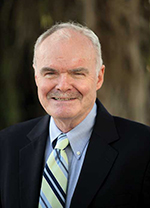

by Bernard McCormick Tuesday, March 20, 2012 No Comment(s)

In the foreword to the 2008 reissue of Gaeton Fonzi’s book on the Kennedy assassination, The Last Investigation, I wrote that one of the saddest elements in this very sad affair was the failure of American media in covering the crime of a century. Specifically mentioned were several newspapers, including The New York Times, Philadelphia Inquirer, Washington Post and The Miami Herald. All of them had access to information which demanded attention, and got very little.

The Herald was on the list because so much detail surrounding the murder of a president relates to South Florida and the CIA’s involvement in anti-Castro activities. Also because, in 1980, what became Fonzi’s landmark book first appeared in the pages of Gold Coast magazine, right under the Herald's nose. Fonzi put in 14 more years investigating before his book was published.

Fonzi became a government investigator for five years precisely because he was in South Florida. Pennsylvania Sen. Richard Schweiker was convinced that the key to a conspiracy could be found here. He hired Fonzi because he remembered a 1960s article in Philadelphia Magazine, in which the writer confronted Arlen Specter, later a longtime U.S. senator from Pennsylvania, and found that the man who came up with the “magic bullet” theory could not explain it. Specter was not prepared for the detailed knowledge of President Kennedy’s wounds that Fonzi brought to the interview.

Schweiker, whose position gave him access to information few had seen, had done his own research and concluded that Lee Harvey Oswald was an intelligence operative. Fonzi’s job was to prove it, and he did. At least he came up with a credible source, a highly respected Cuban working for years for the CIA in attempts to overthrow Castro, who saw Oswald with his CIA handler in Dallas shortly before the assassination.

It was a stunning revelation, and although largely ignored by mainstream media, it was the germ of a number of subsequent investigations over 30 years which have convinced most Americans that it was a conspiracy high in the U.S. government, not a lone nut, that killed President Kennedy.

Next year is the 50th anniversary of the crime, and already books designed to capitalize on that fact are appearing. Which brings us to the Herald. Sunday it ran a long front-page article about a book soon to be published by a retired CIA analyst that claims that Fidel Castro knew in advance of plans to murder President Kennedy. The play the story got makes it appear this is sensational new information. It isn’t. Castro knew that the U.S. had tried to kill him, and sources leaking rumors that President Kennedy would be murdered have been known for years, and almost always trace to CIA figures. The obvious implication is that if he heard such reports Castro must have had something to do with it.

The author of the Herald piece, columnist Glenn Garvin, is the same fellow who some months back wondered why 70 percent of the American people still think there was a conspiracy behind JFK’s death. Well, one reason is that the House Select Committee on Assassinations, for which Gaeton Fonzi worked, came to that conclusion, although it never pinpointed the conspirators. Fonzi, whose personal experience was both in the field in South Florida and inside work in Washington, was so unhappy with the vagueness of his committee’s report that he wrote a dissenting opinion – the magazine articles which eventually became his book. He concluded that if our intelligence community did not kill Kennedy, it surely made it look that way in its obstruction of his committee’s work.

Garvin quoted various people, including some who said Castro had nothing to do with the crime, but one reference jumped out in its strangeness. He referred to Miamian Gerald Posner as “author of the enormously popular and influential Case Closed, which debunked some of the most popular assassination theories.” Posner’s book, although highly publicized at the time, was itself debunked. In spades. It was a quick, shallow and grossly distorted work. It has been widely reported that the editor who commissioned it had been married to a CIA employee, and not just any employee. She was an assistant to the notorious “spy on spies” – James Angleton, part of the CIA’s disinformation team.

It is thought Posner’s book was timed to offset the impact of Oliver Stone’s film, "JFK." It also appeared around the same time as Fonzi’s The Last Investigation. There’s more to Posner. He has since been accused of plaigarism by, among others, Miami New Times. Posner announced a lawsuit against New Times, but it was never filed. Don’t take my word for it. Check him out on the internet. This is the last person who should have been quoted in a serious piece on the assassination.

One wonders if Glenn Garvin, a veteran reporter, has read any of the stuff that makes 70 percent of Americans believe in a conspiracy. And do the editors of the Herald read? That paper’s failure to do its journalistic duty regarding the assassination is part of a national media disgrace.

Gaeton Fonzi, now living on the Space Coast, takes a day or so to catch up with the Herald. His reaction to Sunday's piece: "Outrageous."

Understatement.


by Bernard McCormick Tuesday, March 13, 2012 1 Comment(s)

One of South Florida’s noticeable entertainment losses of the last few years was the closing of O’Hara’s on Las Olas Boulevard. That was part of the Riverside Hotel’s expansion disaster, where half of what had been the boulevard’s liveliest block was knocked down to make room for new construction that never happened.
 
O’Hara’s, owned by Kitty Ryan, had become a popular weekend and nighttime venue. It featured top local entertainment, usually jazz groups, but with an occasional mix of music – such as mini big-bands playing the stuff that made legends of Glenn Miller, Tommy Dorsey and other bands from the '40s and '50s. O'Hara's was not a big place, and those horns blew the doors off.
 
It also altered some careers. Troy Anderson first did his Louis Armstrong imitation, complete with trumpet, as a way to draw customers when he was working the day shift as a bartender. One weekend Kitty Ryan gave him a Sunday afternoon gig, and that was the beginning of something big for Troy. He and his Wonderful World Band have since worked New Orleans and more recently Europe.
 
When O’Hara’s closed, a lot of Las Olas fun closed with it. Now, however, some of that may be coming back. Sunday at Mangos, just a block east of the former O’Hara’s site, owner John Day teamed with Frank Loconto for an afternoon session which promises to be the start of a beautiful friendship. John Day has long been known as a singer, musician and joke teller. In fact, that’s how he got into the restaurant business some decades back. He was working on a boat and doing a little spot entertaining at a nearby inn. He began to draw crowds and decided he should strike out on his own.
 
Most people forget, or never knew, that Frank Loconto was part of the Lane Brothers, a group which originated in Boston and came to Florida. Frank, managed by his wife Phyllis, is more recently known for his "County Line" interview show on BECON-TV, sponsored by the Broward School Board. That show specializes in public affairs. But Sunday people at Mangos were reminded of how good he is at his original calling. A gifted singer who can do the classic songs made famous by Sinatra, etc., he is also a smooth and relaxed stage presence. He banters with the audience, recognizes people in the crowd (he knows everybody) and in general puts on a fine show. His inaugural audience included people such as Bea Morley, known locally as the former owner of popular entertainment venues, such as the Mousetrap and Le Club International. Someone at Sunday’s show described it as “a night club in the afternoon.”
 
John Day and Frank Loconto plan to do this Sunday afternoons, from 3 p.m. to 5 p.m.

by Bernard McCormick Tuesday, March 06, 2012 No Comment(s)

Restaurateur/entertainer John Day likes this one: Irish man walks out of a bar. It’s possible, you know.

 
Now that’s getting to be an old one, but we tell it again before jokes about the Irish and their national art, which is pub crawling, become banned as a hate crime. There are predictions that the end of the world is coming this year, and maybe one of the signs of impending doom is that the Ancient Order of Hibernians has organized a protest against a major clothing line producing disgusting shirts that portray the Irish as a bunch of drunks. At first, we thought this might be an Irish joke.
 
The wording of the protest letter, printed in March, the month of St. Patrick, obviously came from a sober man. Among the phrases: “There are those few who use (St. Patrick’s) day as an excuse to overcelebrate but that does not give you or anyone else the right to defame and debase a whole race of people by selling the garbage that you display in your stores.”
 
We will not mention the clothing line so brutally defamed; that would only create a run on its stores as people slug each other to buy these shirts before they are banned by law and thereby become collector’s items, reminders of a time when a good ethnic slur was only a joke, not a crime.
 
The sad part of this episode is that when the least offendable ethnic group in this country of terrible ethnic groups gets offended, it could spell the end to ethnic slurs as we have come to love them. The Irish may once have been sensitive, but that was a long time ago when they came half starved (the lucky ones) and became the first major ethnic group to crack the American caste system, which was dominated by white Anglo Saxons. Not counting the Indians, of course.
 
Break in the Irish did, and when the original settlers saw the groups that poured in after them, mostly too late to follow the Irish Brigade up the bloody slopes of Fredericksburg, people whose chief faults were a funky form of English and a fondness for strong drink didn’t look so bad. And it reached a point where there were no tasteless names that actually offended the Irish or were considered too harmful to even say in public. The Irish did more than melt in the great melting pot; they practically became the pot. Irish names, quaint to the gentry decades before, would become American when worn by prominent persons. Sean, Colin and Ryan became so common that people did not even think of them as foreign. More recently, thanks to a couple of celebrities, Liam and Aidan became popular. Aidan one year was among the most common names for newborn lads. Immigrants to the country, seeking to become American, took mainstream names they never knew as Irish. That did not happen with names such as Gaetano, Bruno or Hyman.
 
Thus the Irish became uniquely unoffendable. Is 140 a high IQ? For a whole Irish village? And one we wrote about our own family: What do you get when you crossbreed Irish and Germans? Extremely disciplined alcoholics. The association which disturbed the Hibernians is firmly rooted in American culture. Irish pub is as American as Italian restaurant.
 
And naturally people are going to have fun with that. Irish man gets off the boat in New York, walks into the nearest pub and orders two martinis. “Why,” asks the curious bartender, “do you order two martinis instead of a double?” Paddy says, “one’s for me and the other’s for me brother back in Ireland.”
 
Bartender tries not to smile and says OK. This goes on every day for weeks. Then one day the guy comes in and orders only one martini. The bartender, concerned, asks, “is something wrong with your brother?”
 
“No,” says Paddy. “I’m on the wagon.”
 
Not all Irish jokes involve alcohol. Mick finds the lock on his front door broken. So he gets the door off its hinges and is carrying it down the street to a locksmith. He runs into his wife, who says, “you got the front door. How I be gettin’ into the house?”
 
“Oh,” he replies, “I left a window open.”
 
Write it down, as the Irish comic likes to say.
 
One fears that all this good fun might be endangered if any more Irish start taking themselves too seriously and start writing letters to the editor and boycotting those disgusting St. Patrick’s Day shirts. Just thinking about it makes one thirsty.
 
And one for me brother in Ireland.

by Bernard McCormick Tuesday, January 17, 2012 No Comment(s)

Chuck MacNamara wrote for Gold Coast magazine for 40 years. His most recent piece, ironically, was a reflection on the life of former Florida Gov. Claude Kirk, who died in September. Chuck followed him last week. The attached obit from today’s Philadelphia Inquirer mentions that he was lame from polio, a word we rarely hear these days. It happened when Chuck was 16 and a budding track star. He dragged an inert leg around for the last 61 years. Eventually it put him a wheelchair. That handicap did not stop him from working, first at Philadelphia Magazine, and for the last 35 years as a freelancer, often for our Florida magazines.

He was an editor’s dream. His copy was almost always flawless, never an inaccurate statement, rarely even a typo. You could call him on short notice, as we did with the Claude Kirk piece, and ask if he had anything for our Undercurrent section. Days later we got the piece.

Chuck liked a drink. One day at lunch at Bookbinder's across from our office in Philadelphia, he was on his third martini. A companion said, “Chuck, do you realize every time you drink one of those see-thrus you kill 300,000 brain cells?” Chuck reflected briefly, then slowly raised his glass, and, sipping, replied, “I just hope my brain holds on as long as Winston Churchill’s.”

He did not quite make it. But he was close.

***

"MAC NAMARA

CHARLES ‘CHUCK’ Before Google there was Chuck MacNamara. MacNamara, one of the editors who helped pioneer the city magazine concept at Philadelphia Magazine, died Jan. 6, 2012 from heart failure at Morrisville Presbyterian Apartments in Morrisville, Pa. He was known for his extra-ordinary range of knowledge and memory for detail. A 1957 cum laude University of Pennsylvania graduate, he joined Philadelphia Magazine in 1959, and was legendary editor Alan Halpern's right hand man as the magazine grew from an obscure business magazine called Greater Philadelphia Magazine to a publication which won national acclaim in the 1960s. MacNamara wrote entertainingly about often obscure or historic subjects, complementing the work of investigative reporters such as Gaeton Fonzi and Greg Walter. It was MacNamara who introduced his Penn classmate Fonzi to the magazine. He helped invent sections such as ‘Top Docs’ and ‘Best and Worst’ which have since been imitated by hundreds of local magazines. MacNamara was a shareholder in Gold Coast magazine in Fort Lauderdale, Fl. in 1970 when it was bought by his former Philadelphia Magazine colleague Bernard McCormick. After leaving Philadelphia Magazine in the 1970s he wrote numerous articles over the years for Gold Coast and other Florida publications owned by the same company. His most recent piece was in the January issue of Gold Coast. He also wrote an introduction to a soon-to-be-published book on the birth of city magazines in Philadelphia. MacNamara was born in Phila., and lived in Birmingham, Ala. before his family returned to the Lansdowne area. After suffering polio as a teenager, he wore a leg brace for the rest of his life and was confined to a wheel chair in recent years. He is survived by sisters Barbara Lucash of Morrisville and Judith Anderson of Drexel Hill: 3 nephews and a niece and 2 great nieces and a great nephew."