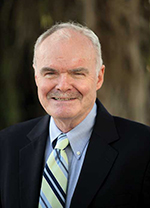
There was a magazine convention at Disney World last week. It brought memories of the original Disneyland in California. They aren’t much alike these days. Disneyland is a postage stamp compared to its sprawling Florida descendant. One obvious constant is the attention to detail, to order. It seems every other employee is cleaning or painting something. Walt Disney liked it that way.
He liked it that way in the summer of 1957, when we went to ROTC camp at Fort Sill, Okla. Four of us drove together. None had been west of West Philadelphia, much less the Mississippi River, and after our six weeks in Oklahoma we decided to move on to California, where we could stay in a trailer at the home of one of the guys' relatives. We planned a brief visit, but Disneyland changed that. The park had been opened for just two years, and it was a natural place to check out. Checking it out, we met some girls who told us that the summer workers from California were heading back to school, and we might get jobs. We did not have to back at college until mid-September.
The fellow who hired us was Ron Dominguez, who went on to a big job with Disney. He said if we would stay until Sept. 15, we had jobs. This was early August. We said we would, and we did. One guy had a speaking job on the Mark Twain boat. Two of us were hired as cowboys. It was an amazing month, and it did not take long to appreciate Walt Disney’s hands-on management style. We did not know what he looked like – not at first – but he roamed the park at all hours, making sure everything was the way he wanted it. And the word came down that Disney wanted the kid taking tickets for the stage coach and mule train to tear those tickets in half before dumping them in the trash basket.
The month passed quickly. We never tired of roaming the park after hours, or wearied of the nightly Mickey Mouse parade. We also saw a bit of history. The mule train riders were mostly kids, but a lot of older people rode the stage. It was late on a September afternoon when we heard an ominous sound. Horses galloping. Normally they moved at a gentle trot. The ponies rounded the fake mountain from the Painted Desert, dragging the rig without the coach, and piled up in the loading area with much shreking and dust. Sensing something unusual, we raced up the trail.
It was a scene out of a western, but this was not make-believe. Something had spooked the ponies, who bolted and could not make a curve in the trail. The coach was on its side, wheels spinning, and people were staggering around, covered with dirt. It turned out there were no serious injuries, but you couldn’t tell that from the scene. We helped one elderly woman to her feet. Elderly in those days was older than 60.
“Young man,” she gasped through a mouthful of dirt. “Does this happen often?”
“No ma’am,” we replied. “First time all day.” Actually, we didn’t say that. Walt Disney would not have approved, but the line has played well over the years. We had little work the next few days. The live rides were shut down, not to reopen – at least not in the same form. Our commitment was up and the Philadelphia cowboys went home, hitting Vegas on the way.
 |
| Karl Wickstrom |
What happens is that the lake water, which is polluted by run-off from agriculture, filled with fertilizer that helps grow crops but hurts anything to do with water ecology, flows into the estuaries and kills them. Or rather it kills creatures, such as oysters and fish, and drives other fish away, and the combination kills businesses that depend on clean water. People who come to Stuart for its famous fishing find the fishing lousy and don’t stay. For an area made so beautiful by its abundant waterways, this is a recurring setback.
The affected communities complain, they get some press (such as a front-page piece in Monday’s Sun-Sentinel), they arouse public interest and sometimes that of elected officials, and not much happens. A few years pass, and without heavy rains the pollution gradually disappears and wildlife begins to recover. There are even times when the lake level gets dangerously low, affecting water supplies in South Florida. But then it happens all over. And it is happening right now.
Our credible source on this matter is Karl Wickstrom, founder and long-time editor of Florida Sportsman magazine. He will go down in the Florida Ecological Hall of Fame, if we ever get such an honor. He is also one of the best publishers we have known in 40 years in Florida. Karl started out in Miami, with the Herald, but now is based in Stuart and sees up close what the lake discharges do. When fresh (although polluted) water mixes with salt water from the St. Lucie River, it is a punch to the ecological gut. We trust his information more than that from any political type. He says, as he has written often:
“Actually, when they discharge from the lake, more water goes west than east, but the west is better able to deal with it. But it’s a terrible thing for both coasts. There are thousands of species that need the mix of fresh and salt water. By flooding the area they destroy sea grasses which are host for a lot of animals. Agriculture is not conducive to good ecology.”
But Wickstrom is not condemning all agriculture. And he makes sure when we announce the principal culprit, “Big Sugar,” we say that is not just the powerful sugar growers, but also citrus and other interests. But as a group they can outvote, because they outspend, everybody else. Which comes to the heart of the matter.
The public thinks the discharges, if they know about them at all, are to protect the dike holding back Lake Okeechobee. Nada, says Wickstrom.
“When the Corps of Engineers says that, it is not really to protect that dike. That is secondary. The first reason is to the protection of Big Sugar. They have spent hundreds of millions in influence.”
He means that water moving elsewhere, toward agricultural land surrounding the lake, especially to to the south where it was directed by nature into what was once a much wider Everglades, before so much land was drained for agricultural purposes, would affect the growers. They have deep pockets and use them to control the politics of pollution. Wickstrom further points out that developers are required to build retention ponds that hold water in times of heavy rain.
“That is required everywhere but with Big Sugar. They have a free ride to pollute the coasts and wipe out all kinds of life,” he says. “They give the impression that the public doesn’t get hurt, and that is so infuriating because they hurt one of the most biologically diverse estuaries in the country. When you ask politicians, they think plans are underway to correct this, but it’s not true. There is nothing being done to stop over drainage.”
In fairness to the Army Corps of Engineers, Wickstrom says the feds have a solution to the problem, which is to take 15 to 20 percent of Big Sugar land and convert it back into sawgrass, a natural filter for the pollutants agriculture causes. It is called Plan 6. What keeps it from happening is called the politics of Big Sugar. It can be a complicated read, especially for most of the public that doesn’t give a damn, but Wickstrom urges people to visit riverscoalition.org.

A few years back we did a historical piece celebrating Fort Lauderdale’s 100th anniversary. Part of it dealt with first families and their descendants. Most of those mentioned had done pretty well, working their way up from the tough pioneer days to become, in later generations, leaders in commerce and the professions.
First among the first was the man who came to town to build a path for others. Philemon Bryan was Henry Flagler’s man in charge of building the section of the Florida East Coast Railway that reached Fort Lauderdale. We knew his family was still important in the area, and while it had little to do with his pioneering activity, the original Bryan’s background was a story of its own. He was a Civil War veteran, who went to war as a teenage drummer in a North Florida regiment. He survived a number of big battles, including Gettysburg, and was there when Robert E. Lee surrendered at Appomattox.
An interesting detail was the makeup of Bryan’s outfit, the Jasper Blues. None of the men owned slaves, and some of them, including Bryan, actually admired Abraham Lincoln. So why, then, did they fight for the Confederacy? It’s a question that bears on the larger question, being discussed now as that war is 150 years old, of what the Civil War was about. Some people object to the notion that states’ rights had anything to do with a fight whose economic cause was slavery.
An interesting detail was the makeup of Bryan’s outfit, the Jasper Blues. None of the men owned slaves, and some of them, including Bryan, actually admired Abraham Lincoln. So why, then, did they fight for the Confederacy? It’s a question that bears on the larger question, being discussed now as that war is 150 years old, of what the Civil War was about. Some people object to the notion that states’ rights had anything to do with a fight whose economic cause was slavery.
It is true that without slavery, there would have been no war, but it does not follow that the men who fought in it were for slavery in the South or necessarily against it in the North. Men like Bryan and his fellow combatants went to war for their neighborhoods, and the larger neighborhood was their state. There were some strange applications of such loyalty, as in case of Wesley Culp who grew up in Gettysburg and moved to Virginia as a young man just a few years before the war. But when the war came he fought for his new neighborhood, Virginia, and, in the rarest of ironies, was killed at Gettysburg at Culp’s Hill, land owned by his uncle where he played as a boy.
Those who condemn objects of the war, as the Confederate flag, as racist symbols, often forget that until the war settled the issue, the states considered themselves the foremost instruments of government. While the northern states fought to preserve the union, the southern states felt less sense of union. They did not want to be told what to do. When some in Texas talk of secession today, it is taken as a joke. But it was no joke in 1861.
As the anniversaries of the great battles are noted over the next two years, the debate over why the war was fought will continue. Those who say it was simply about slavery are right, but that does not make those who argue that men fought for states rights wrong.
As the anniversaries of the great battles are noted over the next two years, the debate over why the war was fought will continue. Those who say it was simply about slavery are right, but that does not make those who argue that men fought for states rights wrong.

The driver was frustrated. He (or she, but probably he) was trying to get onto Broward Boulevard from one of the side streets near U.S. 1. Traffic was backed up, even at a nearby light. Thoughtless drivers, probably on cell phones, blocked the intersection, flat in the middle of a red light, preventing other drivers from being able to move even though they had the green. Horns of protest were heard. You see it every day on Fort Lauderdale’s increasingly congested main roads. And the driver trying to get onto Broward had seen enough. He backed up and made a U-turn, very tricky when backing up, and did not quite pull it off, hitting a curb, then retracing in the opposite direction, not terribly pleased with his present station in life.
We might as well get used to it. This is not even the season, and yet day by day it seems that the renewal of downtown Fort Lauderdale is becoming a self-defeating reality.
Thoughts go back to the 1970s when Bill Farkas came to down as the Downtown Development director. He found that the person he replaced had put the town in a legal pickle, having razed buildings the city did not own. There were several blocks of empty dirt, surrounded by tired structures, and until legal issues were resolved, nothing new could go up. The solution was to put in some nicely landscaped tennis courts, just to give the impression that something was happening. And when something actually did happen, some people complained that the city had taken away their nice tennis courts.
Bill Farkas did a good job (some might say brilliant) and did another good job later when he supervised the building of the Broward Center for the Performing Arts. But when he took over, things were depressing. In a broad sense, Fort Lauderdale and environs were booming. The Galt Ocean Mile had been transformed from an open beach where teenagers used to park to a row of new condominiums. Nearby Coral Ridge was being built and the western suburbs were replacing farmland.
The downtown, however, instead of advancing, was in retrograde. The only major store was Burdines, and it decided to leave for the newly built Galleria Mall. It is now Macy’s. Farkas had not even been told of the move in advance. But he managed to save the building as the Broward County Government Center, and slowly the vision of a modern downtown was realized. Farkas, who now lives in Dade County, could hardly imagine that, some 30 years later, people would be worried about out-of-control downtown development.
But they are – or should be. As we write, there are five cranes jabbing the skyline within a few blocks along U.S. 1. Nearby are blocks of recently built apartments, which have replaced 1920s-era cottages, most of them already converted to small offices. There is more high-density building going on near the New River, and other sites awaiting approval. All this building is great for the construction trades, but does anyone worry about the traffic sure to come from thousands of new residences, crowded around a downtown that is hard to navigate as it is?
One of the unusual features of Fort Lauderdale is the desirable neighborhoods surrounding the downtown, convenient to shopping, entertainment and even the airport. They include Victoria Park, Las Olas Isles, Rio Vista, Colee Hammock, Tarpon Bend and Sailboat Bend. Although homes there vary greatly in value, they all share a quality of life not found in many Florida cities. And all have benefited from investment in restoring and improving, and in many cases replacing older dwellings. But for the most part, the changes have not brought dramatic increases in density. And the city, beginning more than 20 years ago, has tried to protect those neighborhoods by blocking cut-through traffic, trying to channel onto the main thoroughfares.
But that is not the case with all the new construction underway at the heart of the roundel of established neighborhoods. Rampant building is going on with little, or no thought to solving already vexing traffic problems. The new life will surely degrade the quality of the old.
Better practice U-turns backing up.

Like many great discoveries, it came almost by accident. Since the dawn of time, scientists have been trying to figure out the difference between men and women. And right here at an alumni luncheon we were discussing a celebrity, one well-known in the broadcast news business, who happens to be the daughter of one of the couples at the luncheon.
Unfortunately, this discussion did not take place until after everybody had split. We asked if the other half had met the parents of the famous daughter.“Were they there? I wanted to meet them and tell them how good their daughter is.”
“I thought you met ‘em. I would have introduced you. It was hard enough figuring out who the guys were, and I’ve seen most of them over the years. People change after 60 years. At one time you were standing next to her. You were talking to the guy you mixed up with his brother. I thought you met them. You probably did and didn’t even know it.”
And this is exactly where the great scientific breakthrough came: “What was she wearing?” the other half asked.
“What was she wearing? How the hell do I know? She was wearing clothes, I guess. I probably would have noticed otherwise.”
"I mean what color dress? Or was she wearing a flowered pant suit? Was she the one in that little vest?”
"How do I know? Who would even notice, with 50 people milling around, all trying to figure out who the hell was who. I don’t even know what you were wearing, and you’re still wearing it.”
There was another woman privy to this exchange. And she said: “Women notice that kind of thing.”
"What kind of thing?”
“What people are wearing. Especially other women.”
Eureka, or other such expressions. For the first time in history it was revealed that the big difference between men and women is that women notice what other women wear, and men can’t tell the difference from one old lady to the next, unless one of them is in a thong.
“What color was her hair? Do you remember how she was wearing it?”
“Was or is,” we said. “About 50 years ago it might have been sandy, streaked with silver. Now it’s the same color as all the others. Blonde or charcoal or Columbia blue – anything but what is really is. And I’m pretty sure she wore her hair on her head.”
“That’s more than half the men there could say.”
“Don’t get personal. I guess you want to know what color eyes. They all have the same color – pale moon embroidered with rubies.”
“Interesting. When we go to cocktail parties, you seem to notice what those sexy bartenders are wearing.”
“You mean not wearing.”
And so it went on, declining in historic value, all the way down the Shenandoah Valley. But that did not change the thrill of discovery of the difference between men and women. There may be other differences, yet uncovered by the hand of man. We will let you know if they surface.
Unfortunately, this discussion did not take place until after everybody had split. We asked if the other half had met the parents of the famous daughter.“Were they there? I wanted to meet them and tell them how good their daughter is.”
“I thought you met ‘em. I would have introduced you. It was hard enough figuring out who the guys were, and I’ve seen most of them over the years. People change after 60 years. At one time you were standing next to her. You were talking to the guy you mixed up with his brother. I thought you met them. You probably did and didn’t even know it.”
And this is exactly where the great scientific breakthrough came: “What was she wearing?” the other half asked.
“What was she wearing? How the hell do I know? She was wearing clothes, I guess. I probably would have noticed otherwise.”
"I mean what color dress? Or was she wearing a flowered pant suit? Was she the one in that little vest?”
"How do I know? Who would even notice, with 50 people milling around, all trying to figure out who the hell was who. I don’t even know what you were wearing, and you’re still wearing it.”
There was another woman privy to this exchange. And she said: “Women notice that kind of thing.”
"What kind of thing?”
“What people are wearing. Especially other women.”
Eureka, or other such expressions. For the first time in history it was revealed that the big difference between men and women is that women notice what other women wear, and men can’t tell the difference from one old lady to the next, unless one of them is in a thong.
“What color was her hair? Do you remember how she was wearing it?”
“Was or is,” we said. “About 50 years ago it might have been sandy, streaked with silver. Now it’s the same color as all the others. Blonde or charcoal or Columbia blue – anything but what is really is. And I’m pretty sure she wore her hair on her head.”
“That’s more than half the men there could say.”
“Don’t get personal. I guess you want to know what color eyes. They all have the same color – pale moon embroidered with rubies.”
“Interesting. When we go to cocktail parties, you seem to notice what those sexy bartenders are wearing.”
“You mean not wearing.”
And so it went on, declining in historic value, all the way down the Shenandoah Valley. But that did not change the thrill of discovery of the difference between men and women. There may be other differences, yet uncovered by the hand of man. We will let you know if they surface.
 One notes the case of a Broward city commissioner who has been subject to a recall movement. She is easy to recall, for who could forget the dumb defense that worked when she was on trial for allegedly taking stuff in return for her vote. Her dumb defense, in effect, was that she was too dumb to do anything crooked. Her lawyer argued that she was admittedly not a bright bulb, but surely not venal. She simply did not realize anything was wrong. A jury accepted that explanation and found her innocent by virtue of stupidity.
Now she wants her job back, and is fighting the recall on the grounds that this is all personal. She may not be smart enough to realize it, but she may be in the process of establishing a new campaign mode for South Florida. We can see the day when the key to political success will be to appear dumber than anybody running against you.
We had a chance to interview a prospect for a political office.
“Your principal qualification is stupidity, right?”
“Yes, sir. There’s nobody out there who can touch me when it comes to being one brick short of a load.”
“And that qualifies you for public office.”
“Sure, I’m too dumb to cause any harm. I won’t understand the laws. I’ll vote for anything anybody wants, as long as my net worth increases annually.”
“Your opponents don’t seem that bright," we said. "How do you know you outdumb them?”
“Oh some of them may have a certain cachet, but not dumb as a stump like me. I’ll take a polygraph.”
“What was that word you used?”
“What word?" he said.
“Didn’t you say cachet? Now that’s not an everyday dumbster’s word. You even pronounced it right. A truly dumb person would rhyme it with hatchet, rather than the traditional French pronounciation, which rhymes with maché. People who are trying to become smarter tend to use such words, like paradigm and conundrum, and they fancy expressions such as ‘kick the can down the road,’ and ‘at the end of the day,’ and ‘you have my back.’ Nobody knows what they mean, but they sound smart. You could have a problem if voters perceive you are trying to become smart. And, by the way, by cachet did you mean an official seal of recognition or approval, or were you referencing a medicinal preparation for swallowing consisting of a case usually of rice-flour paste enclosing a medicine?”
“No, I didn’t mean nothing like that. I was thinking more of a design or inscription on an envelope to commemorate a postal or philatelic event. Also a girl who dresses good," he said.
“Friend, I think you have a problem. People will distrust you if they think you are smart enough to pretend to be stupid just to get their vote. You can’t use arcane words and be accepted by a dumb voter. For starters, you need to bury the cachet. And imagine if you got in front of a jury for misfeasance or malfeasance. You could never convince them they you are too dumb to be on the take. I think the reason the woman got off was that she may well have been truly, honest-to-God dumb, a bona fide boob, and the jury was smart enough to grasp that. Suppose in a trial somebody uses a word like ‘venal.’ What would you say?”
“I’d play dumb.”
“Friend, we wish you well. But we’ll put our money on the jury.”
 |
| Robert E. Lee |
It was a beautiful day on the battlefield. We were standing near the famous copse of trees that was the Confederate objective on Cemetery Ridge, the site of the legendary Pickett’s Charge. The grandsons asked if they were the same trees as in the battle. Interesting question. If so, they must be well leaded. A father from Scranton was with his boys and he said, “I have a million questions about this battle.”
“We could probably answer five-hundred-thousand of them,” an eavesdropper said.
“I know nothing about the battle,” the father said, looking over the expanse of flat, mostly uphill land a mile wide toward Seminary Ridge, “but I wonder why they ever made that charge across open fields.”
“People have been wondering that for 150 years,” he was told. It was just a coincidence that we visited Gettysburg just a few weeks before the 150th anniversary of the greatest killing field on American soil, but it was no coincidence that a man viewing the battlefield for the first time wondered why so great a general as Robert E. Lee sent 12,500 of his best troops on an attack that even his top lieutenant thought was doomed to fail.
Lee, largely silent on the subject, said only that he thought his men could do anything and added that, for reasons unknown, his plan of coordinated attacks from three different directions was not carried out. He also said he could have used Stonewall Jackson, who had been killed at Chancellorsville a month before.
The great general was hardly alone in attacking a formidable Civil War position. Union Gen. Ambrose Burnside at Fredericksburg sent the Irish Brigade to slaughter in a hopeless uphill attack. And Gen. John Bell Hood destroyed the better part of a Confederate army in similar fashion at the Battle of Franklin in Tennessee.
But it is Gettysburg that continues to fascinate and draw the crowds. For the big anniversary next week there will be almost as many people wandering around Gettysburg wearing Civil War uniforms as took part in the original fight. And some of them, like the fellow from Scranton, will ask some strange questions. Columnist George Will overheard people saying that it was interesting that so many of these great battles took place in national parks, and observing that the battle could not have been that bad – there are no bullet holes on the monuments.
Gettysburg has too many monuments; some of them look like churches. Compare it to Manassas (Bull Run) right outside Washington. The first big battlefield of the war has little statuary. Or Five Forks near Petersburg, Virginia, the last big engagement. Many of the 9,500 Confederates were captured, greatly weakening the already worn-down Southern army, and forcing Lee to abandon his position and begin the retreat that led to Appomattox. That battlefield has hardly changed over a century and a half, but it is barley recognizable as such. It was not even on the historic registry until 1960. Five country roads still intersect, but there is a lone cannon and a marker to remember the battle. You could pass it without notice.
 |
| Cape May, N.J., is the nation's oldest seashore resort. |
Some of this has been written before; some hasn't. If you have read it before, skip those parts. The part repeated is a call for the Auto Train concept to be extended throughout the Republic. We have been riding this train almost annually since it began as a private enterprise in the 1970s, and we'd like to point out that it is not only a great idea, but is the only long-distance train in the Amtrak system that does not lose money.
Our most recent trip came amid the terrible weather that raced up and down the East Coast. Bad weather in the north delayed the southbound train arriving in Sanford, Fla. Therefore the train was about 20 minutes behind its scheduled 4 p.m. departure. Often it leaves early, just as soon as all the cars and their passengers are aboard. Despite the late start, it still managed to pull into Lorton, Va., a half hour before the scheduled 9:30 a.m. arrival. This trip was close to maximum - more than 300 vehicles. We have asked before, and ask again, why such a good idea, proved now over four decades, has not spread to all long-distance trains in the country?
The train saved us a day, maybe two, of hard driving on the way to Cape May, N.J. - the nation's oldest seashore resort. It taught Florida how to do it. There the big sports news was not the Miami Heat in a slugfest for the NBA championship, but rather the U.S. Open being played a few hours away at Merion East, outside Philadelphia. The weather there, as at the shore, turned from torrential (aka known as a typical Florida summer afternoon) to spectacular as the week wore on. The tournament, as you know, was not won by Tiger Woods, who may be still out there in a creek, but by a pleasant English chap who said all the right things.
The Philadelphia Inquirer, once part of the same company that produces The Miami Herald, covered the tournament in detail - much the way the Herald covers the Heat - describing each shot by every player, living or dead.
The same day as the big tournament coverage, the Inquireralso began a series of ambitious design. It seemed more than appropriate for an ex-Philly dog touring the disaster that has become of the old neighborhood. No grass, no glass, and in many cases no houses - just gaps like a missing tooth - where friends had once called home. "The Wheel Man" deals with a 2008 murder of a young man from Minnesota who had come to Philadelphia to teach. Six weeks later, coming home late from a part-time job at Starbucks, he was shot in the head from behind by someone who wanted his cell phone. The story is about how the cops, starting with almost nothing, got their man.
It is told in a gripping, staccato tone. You can smell the empty houses, rotted porches sagging, where crack dealers flop. For atmosphere, think "Blackhawk Down," which ran in the same paper. Example: "Another time, he got a cell phone from Ant North, a cracked white Samsung. He never said anything about a dead teacher."
The Inquirer is going for a prize on this one. Don't be surprised if they get one. Elsewhere in today's paper, there is a story about the Miami Heat fighting tonight for survival. But you probably knew that.
 |
| Dan Christensen is a respected journalist and founder of Broward Bulldog. |
It is a Florida story if ever there was one. Recently broken by Dan Christensen’s BrowardBulldog.org in The Miami Herald, it deals with a wealthy Saudi Arabian family who left Sarasota in a hurry just before 9/11, after (as the story explains) visits by some of the suicide terrorists since identified in that event. It involves the FBI’s denial that the information was relevant to that great crime, and more recently an investigation, followed now by a lawsuit, filed by former Florida governor and U.S. Sen. Bob Graham, demanding to know the details of what appears to be a shocking cover-up. On top of that, crucial legal decisions are now before U.S. District Judge William Zloch of Fort Lauderdale.
Some background. Dan Christensen is a highly respected journalist who lost his job during the cutbacks at The Miami Herald. “Rather than flip hamburgers,” Christensen says, he decided in 2009 to launch BrowardBulldog.org, an independent investigative organization. He has been funded largely by contributions. Michael Connelly, ex-Sun-Sentinel writer turned best-selling crime story author, has been among the most generous.
Broward Bulldog has done what it promised, and a number of its stories have been picked up by newspapers. But none seems as potentially powerful as this one. Christensen says the original tip came from Anthony Summers, an investigative reporter based in Ireland who has written respected works on the Kennedy assassination and on 9/11. Summers was credited as co-author of Broward Bulldog’s work.
“Tony told me he had gotten this tip and asked if I wanted to work on it,” Christensen says. “I said sure.”
Christensen first broke the story in 2011, but the impact became far greater with the recent revelation that the FBI did not reveal documents relating to contacts between the 9/11 bombers and the Sarasota Saudis. This is where Graham comes in. As co-chair of the 9/11 commission, he and no one on his commission were told by the FBI that it had information on the Sarasota connection. Graham knew nothing of this stunning information until informed by Christensen and Summers. But after Broward Bulldog sued the FBI, supported by Graham’s affidavit, the FBI released 31 pages of documents related to a matter of which they initially said they had no information.
Says Christensen: “The FBI told me to my face there was nothing to this. But it is crystal clear there is more to it. All of a sudden in March, they discover 31 pages that contradict what they had been saying publicly.” Former Sen. Graham thinks there is a lot more, and with his background in Washington, he deserves an opinion. In the lawsuit he said he suspects such a matter might have thousands of pages of information.
Defying someone such as Bob Graham is not quite the same as stonewalling a cutie working the NFL sideline. Graham served 10 years on the Senate Select Committee on Intelligence and was chairman when 9/11 occurred. His family is also related to the ownership of the powerful The Washington Post. He is hardly someone to mess around with.
The question is why would the FBI conceal something of such importance? The suspicion, at least here, is that it suggests involvement by very important people in Saudi Arabia, a nation that is allegedly our best friend in the Arab world. It also suggests that if this concealment is as blatant as it appears to be, it must have been known on a level higher than the FBI. Whatever the reasons, the FBI has asked Judge Zloch to quash this suit on the grounds of national security.
Christensen notes an eerie comparison to another horrific event – the JFK assassination. He knew Gaeton Fonzi shortly after Fonzi published the first credible evidence linking the “lone nut” Lee Harvey Oswald to a high-ranking CIA agent. That was more than 40 years ago. And today, drop by declassified drop, it is clear that both the CIA and FBI concealed what they really knew about Oswald, and almost every other crucial aspect of the murder of a president.
Fonzi’s work, although it began in Philadelphia, largely took place in South Florida, where he explored connections between anti-Castro groups and the CIA – eventually leading him to a connection with Oswald. For 40 years the CIA denied having anything of importance in its files on Oswald. Then, Jefferson Morley, at the time working for The Washington Post, found evidence that Oswald was known to the CIA well before the murder in Dallas, and efforts to conceal any connections to our intelligence apparatus went far up the agency’s ladder.
Another similarity is the lack of mainstream press attention to an important story. Although it broke last week, almost no major newspaper has picked up the story. That’s hard to believe, considering it broke in The Miami Herald and involved someone as prominent as Bob Graham.
In the case of Christensen’s work, it has only been 12 years since that awful day in New York. Either investigative reporters are getting better, or the cover-up artists less adept.
We expect more on this. Stay tuned, or for faster transmission, log onto BrowardBulldog.org.

We are looking at a copy of CITYVIEW, which does not have a space between "city" and "view." This appears to be the first issue of a publication sponsored by the Downtown Fort Lauderdale Civic Association. It seems to be one more attempt for a quasi-government or quasi-community group to get into the magazine business. This has been going on forever. One of the best city magazines, Philadelphia, had its origins as a chamber of commerce publication which nobody read. For more on that, read The Philadelphia Magazine Story, written by Bernard McCormick, no relation to us except the same person.
We wonder why such groups always want to have publications, which sell ads. Why not start a bank? Northern Trust would love that. Why not just a nice little restaurant, or a marina, or better still, a high-rise apartment? But that’s not the point today. The point today is that the cover of this new pub (not be confused with a real pub, such as Maguires Hill 16) features a shot from space, or somewhere aloft, showing all the planned new buildings in downtown Fort Lauderdale. Some, as regulars on Federal Highway notice, are seriously underway. Others are just waiting for approval. The outline of the geography into which these new buildings fall is outlined in yellow on the magazine’s cover. It resembles the helmet logo of a pro football team. Maybe the Atlanta Falcons.
But pageantry is not the theme today. The theme today is that inside the book there is a page devoted to “Downtown Development Projects” which shows all the buildings involved, in type so small that we needed the young eyes of one of our beautiful editors, aided by a magnifying loop (a relic of the days when we used them to blow up photography proof sheets) to read the tiny print. And that print revealed that the 15 projects listed, if all built, will produce nearly 4,000 residential units and 108 hotel rooms. That is an enormous increase in population in a section not much more than a mile long and half as wide at its fattest point. The magazine articles accompanying the map describe this as a wonderful event for downtown Fort Lauderdale. All these jobs, all these new residents, etc. But it doesn’t mention all these cars, which typically will be more than one per unit.
That is our theme. All this development comes at a time when those already living in downtown, especially those in residential neighborhoods such as Victoria Park, Colee Hammock, Flagler Heights, and (although most of them don’t seem to sense it) even Rio Vista, are increasingly concerned about traffic already here. It has been going on ever since the city, in an effort to preserve the residential quality of convenient downtown neighborhoods, began closing streets more than 20 years ago. The idea was to redeem old neighborhoods caught between the growing beach and the sprawling western areas. But the agitation is recently renewed, especially from those living on the Las Olas Isles who want to see streets between Las Olas Boulevard and Broward Boulevard reopened, so they can more easily visit the Galleria Mall, or wherever they want to go to the west. Obviously, the people in Colee Hammock are not thrilled with that idea. Some of the city’s most impressive new homes have been built in that neighborhood precisely because the city had the good sense to reduce cut-through traffic years ago. Business on Las Olas has sent employees parking all over the nearby residential neighborhoods, to the chagrin of those who live there. You see landscaped swales, and those spiky things, popping up all over.
Even before all this new downtown construction, you see the Henry Kinney Tunnel backed up during the season (take note, Rio Vista) and the office building where Gold Coast magazine resides sometimes has its own traffic jam trying just to get out of our own parking lot.
Is this an easy problem, Fort Lauderdale veering toward New York, where no sane person ever drives? Obviously not, but some thought should be given to the traffic problem, before the euphoria of all this new growth confronts reality.