When Florida East Coast Industries (hereafter known as FEC) came up with the name All Aboard Florida, it probably did not mean all aboard for critics. But everybody from the marine industry to people who like walking on railroad tracks has added baggage to those worried that the proposed fast train from Miami to Orlando will destroy tropical living as we know it.
The criticism is particularly loud in Palm Beach County where the Palm Beach Post has run a number of stories (including one today) reporting concerns about noise and safety. Such fears have drowned out those supporting one of the most important steps in Florida transportation since – well, since Henry Flagler brought the trains here in the first place.
Not that these worries aren't legitimate, especially in the case of the marine industry, but some of the noise is like the people who move next to a booming airport and then complain about the airplanes roaring overhead. Anyone with vision could have predicted that this FEC track running through the heart of cities up and down the East Coast would someday be a crucial and busy component of a modern transportation system. Especially since Tri-Rail 25 years ago proved the usefulness of a commuter train, even one running on the wrong track.
People in Palm Beach County are asking why they have to pay the price for a train that doesn't do them any good, that will principally be used by tourists headed to and from Disney World. Well, give it time. Tri-Rail has already identified locations for stations if (and it seems almost certain this will happen) it moves some trains to the vastly more useful FEC tracks.
The controversy over All Aboard Florida planning to run trains at 75 mph on tracks with frequent grade crossings might be a blessing in disguise. It calls attention to the reality that the FEC needs a new railroad, or better put, a modernization to bring it into the 21st century. There are places where the new train could actually get up to 75 mph. The more than two-mile stretch from Griffin Road south of the airport to State Road 84 is free of crossings, and the train could move out. And there are miles along Dixie Highway in both north and south Broward where an engineer can see well down the track and brake safely in an emergency. There are other places where grade crossings at minor streets could be closed, making higher speeds practical. But for much of the route in Broward and Palm Beach counties it would be dangerous for a train to go much over 50 mph. It is from these neighborhoods that fears of constantly blaring horns and crashes at grade crossings have arisen.
It would not be surprising if the FEC has anticipated this opposition, and sensed the opportunity to turn it into an opportunity to modernize its track, with much of the cost carried by government. Some improvements are a necessity, the principal one being downtown Fort Lauderdale where the marine industry along the New River would be severely impacted by many additional drawbridge closings. What is needed is a high bridge, similar to the one that takes Tri-Rail and the longer Amtrak trains across the river farther west, or a tunnel under the river. The Tri-Rail bridge on the CSX tracks is about a mile long, and even that is too steep for long freight trains. They still cross the river on a drawbridge.
Such a bridge on the FEC would leave the status quo, with freights still using the drawbridge. We can also anticipate a new All Aboarding party – the residents of buildings near the railroad who would hate their view to be a bridge just outside their balcony. A tunnel would be a permanent cure, if the grade were sufficiently gentle to permit shorter freights to use it along with passenger trains.
It sounds like a huge expense, and it would be, but not as bad as you might think. The tunnel itself need be no longer than the Henry Kinney Tunnel on Federal Highway. It’s only about two blocks long. The approaches could be open air, going under Broward Boulevard (a blessing for drivers) and extending for blocks on each side. From the railroad’s point of view, that should be intriguing, opening up the prospect of air rights for blocks of downtown Fort Lauderdale.
One tunnel does not rebuild a railroad, but it’s a beautiful start.
 |
| Wally Brewer |
When we become king, the first thing we will do is raise from the dead the obit writers of the world. Their death was never officially announced. The papers just sort of hinted at it, by gradually cutting back from a few obituaries a day to maybe just one, and often none. Unless you pay for it.
Now, that's a whole different story. You still see obituaries in the papers but almost all of them are like ads. They cost money. And often they read like ads, filled with phrases such as "joined the Lord" or "ascended to heaven" and surrounded by “loving and devoted family.” They avoid at all costs the word "died." And you never read that someone "died and went directly to hell."
This has obviously become a good source of income for newspapers. We paid for an obit in a northern paper for a colleague who had played an important role in the development of regional magazines. We thought he deserved a real obit, for free, but it was not to be. Our piece was therefore tightly crafted, about seven inches, and cost $1,300. We wanted to write more but we ran out of money. At least you know when you read something that long that the deceased must have had some status, or at least somebody (usually a relative) thought so. Not long after we saw a free obit for a woman who worked for the same newspaper. What was her job? She wrote obits. Some jobs come with privilege.
Now, not all obits are paid for, not directly. A funeral home usually will submit a death notice as part of its fee. They usually say: "Joe Smith. May 6, 2014." They rarely exceed three or four lines. If they do, the cash register comes on. It is easy to tell a real obit from a death notice. A real obit looks and reads like news, because it is. A paid death notice looks like a death notice. It has small, crowded type.
Our first job as a sports writer on a suburban daily had us sitting next to a woman of vintage whose sole job was to write obits. From 7 a.m. on, she was busy talking with funeral directors. At the same time she was working on her horse racing form, picking her nags for the day. She mumbled aloud. One got to recognize names of jockeys and horses, as well as an occasional name of somebody who had passed. Rarely did she show emotion in her work, but when she did, the whole newsroom knew it. "Twenty-three! What the hell did he die from?"
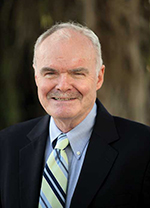
These morbid thoughts are occasioned by the recent deaths of two prominent people. Earl Morrall made the front page of both the Sun-Sentinel and The Miami Herald the day after he died. Giants of football, including Don Shula, were quoted at length. Wally Brewer barely made the paper four days after he died, and just a day before his funeral service. The picture was barely recognizable (see above). Nobody was quoted. It was a paid death notice.
Now, Earl Morrall deserved the attention he got. He was backup quarterback in the Miami Dolphins undefeated 1972 season, and won many of the games. He did the same for the Baltimore Colts a few years before when the great Johnny Unitas got hurt. Morrall was an outstanding citizen – he was the mayor of Davie and was an exemplary figure from a team that had more than its share of exemplary figures. Even though he had moved to Naples, many people would remember him.
We wonder, however, if more people might remember Wally Brewer. We knocked out a fast blog on him when we thought his death might not even make the paper. It got more reaction than anything we have done over the last several years. Thousands of people knew Wally, and not just from a distance. He was one of the best known bar owners in the long history of the hospitality industry on the Gold Coast. He started in Boca Raton in the early 1960s and over the next 50 years owned four more places, all of them popular. He was a prominent figure in the Irish community, Irishman of the Year, grand marshal of the St. Patrick’s Day parade, and was known to escort a green pig from bar to bar on St. Patty’s Day.
He also was a community guy, and did a lot of good for many people and organizations. One of his contributions was leading the way in the redevelopment of Fort Lauderdale’s historic district. In 1991, he opened The Olde Towne Chop House located at Second Street and the FEC Railway at the time the Broward Center for the Performing Arts was about to transform a shabby district. It became popular with the Blockbuster Entertainment crowd, and Wally’s always smiling, ruddy face and cordial welcoming became a signature for urban renewal. He was, in short, deserving of a serious sendoff. His funeral mass and celebration at Coral Ridge Country Club were well attended, but not as well as it might have been had more people known he was gone.
It seems like poor business for the papers to make obits of important people a source of revenue. After all, their declining readership tends to be older people – the ones who read obits. Young people don’t read obits, or much else for that matter. And that may be the problem. Perhaps the older people at the papers, who would know Wally Brewer, have all been bought out, and none of their replacements had even heard of the man.
The eulogy by Wally Brewer’s lawyer, Ernie “the attorney” Kollra captured the man very well. It was warm, witty and rich in anecdote. Too bad you didn’t read it in the paper.
 |
| Wilt Chamberlain on the cover of Philadelphia Magazine. |
As it sometimes happens, a sordid basketball story got pushed aside for a sublime one. At least that’s what happened in South Florida, Philadelphia, Portland and a number of other towns where the news of Dr. Jack Ramsay’s death made other sports news seem irrelevant. The sordid story temporarily pushed out of the headlines was the racist stuff involving Donald Sterling, the owner of the Los Angeles Clippers. As a casual NBA fan (our team has to be winning) we did not even know the name of the Clippers’ owner, or most of the rest of the NBA owners for that matter. There are too many of them.
But you can never have enough Jack Ramsays. We like to think we have the distinction of being the only guy who covered that legendary coach on three levels – high school, college and the pros.
The high school was St. James in Chester, Pa. We were a sports writer for the student paper at a different school, but we covered our games against a pretty good St. James team. Then, in 1955, Jack Ramsay moved up to coach St. Joseph’s College, and by now at college at La Salle, we covered our games against his teams for three seasons. The previous season La Salle had won the NCAA championship, and we had beaten St. Joe’s five out of six years. But for the next three years, St. Joe beat us. We began to sense they had a great coach, and we hated him, even as we tried to be fair in covering the games for our school newspaper. Our talent was equal to theirs, if not better. Our guys always played hard, but St. Joe seemed to have more intensity, more organization. We have since been convinced that had Ramsay been our coach, all three of those games would have been La Salle wins.
Skip forward a decade, during which Jack Ramsay became Dr. Jack Ramsay, and established a reputation as one of the best coaches in the country. Then he moved on, seemingly burned out. At one time he had vision problems. He became general manger of the Philadelphia 76ers, where we first actually met him, while working on a magazine piece on the team that had just won the NBA championship with Wilt Chamberlain. The coach we had despised in college quickly won us over with his warmth and cooperative spirit. He was always a good interview.
His burn out soon burned out. He returned to coaching and for 19 years was one of the best in the NBA, winning it all at Portland in 1977. By that time he had influenced many other coaches, several of whom had played under him. In the process he also changed basketball.
“Very few coaches change a game,” said Bill (Speedy) Morris when he was coaching excellent La Salle teams in the late 1980s. “But Jack Ramsay changed basketball. I must have read his book (Pressure Basketball) eleven times.”
Before Ramsay, defense in basketball was a half-court game. Ball handlers could often walk the ball to mid-court. But his teams, beginning at St. Joe, pressed full court, attempting to trap a ball handler into a bad pass, or call an emergency time out. It is a tactic you routinely see today. And it began with Jack Ramsay.
As you see in today’s papers, the basketball world grew to love the man. He was especially admired in South Florida (he spent winters in Naples) where he did color for the Miami Heat broadcasts and then for ESPN. He was as good at that as he was at coaching. For a man who coached with such intensity, his demeanor off court was always gracious and dignified. He helped anybody he could. The comments today from Heat personnel outdid each other in praise for his personal qualities. It was reported that, when coaching, Pat Riley used to glance at Ramsay at the announcer’s table to get his take when Riley thought a ref made a bad call. Ramsay would respond with a subtle nod or shake of his head.
Donald Sterling may be in the basketball news today, but whatever his fate, we doubt anybody will know his name ten years from now. The legend of Dr. Jack Ramsay will endure.
Danny Chichester said, not long before his death, there’s only two guys in this town that if you say “Danny and Wally,” everybody knows who you mean.
“How about Wayne?” we said. “He ain’t in the bar business,” said Danny.
The other half of the team everybody knew by first name died Monday. He was 85. Wally Brewer had been sick for some time, but he goes down with a narrowing list of famous bar-restaurant owners in Gold Coast history.
We are going from memory, but Wally showed up in South Florida in the 1960s. We first met him when he had an active downtown place in the mid-70s. It was razed to make room for what is now Fort Lauderdale’s bus terminal. It was popular with government workers. It was close to the state office building, and federal people were often there.
Wally moved up to north Federal Highway near 26th Street. C. 1988. He ran a popular spot there until the early 90s when, anticipating the opening of the Broward Center for the Performing Arts, he opened Wally’s Olde Town Chop House. It was right on the railroad, at 2nd Ave. and 2nd St. At the time it was a distressed neighborhood, a bum in the doorway location. It is now one of the busiest corners in town, across from Tarpon Bend. Wally led the charge to that sector, and we recall him standing outside his place, exclaiming “Bourbon Street, Bourbon Street!” He foresaw that strip becoming a mini-version of the legendary New Orleans entertainment district.
He was a bit ahead of his time, but it did turn out that way. The Olde Town Chop House did a great lunch, particularly with the Blockbuster Entertainment crowd – only a block away at that time. Wayne Huizenga liked Wally, and when the Florida Panthers won their first playoff series, Wayne called long distance to ask him to stay open late so he could bring his Panthers gang there for a midnight celebration. Bob Guerin, one of Wayne’s lieutenants at Blockbuster, recalls helping out in the short-handed kitchen that night.
Wally Brewer eventually sold his place (several times; he had to take it back more than once) and then opened a smaller bar in the Galt Ocean Mile area. It was his last hurrah. An obit has not yet made the paper, but according to his friend, Jim O’Connell (a regular at the chop house) a funeral mass will be held at St. John the Baptist Church in Coral Ridge at 11:30 A.M. Friday.
His friend Danny Chichester had it right. Danny and Wally. Names everybody knew.
 |
| Painting by Bob Jenny |
Except, it isn’t that much of a mystery. Not according to the late architect John Evans, who wrote about the subject years back in Gold Coast magazine. Evans had an unusual perspective on the subject. He was almost on the lost flight. As Evans wrote, he was a young gunner on a Grumman TBF Avenger based in Fort Lauderdale. He, like the crewmen who disappeared, was training at the base, and might have been assigned to the ill-fated flight had not he gotten leave when his parents came to visit him.
Evans, who participated until his death in the annual memorial service for the flight, always debunked the theory of the Bermuda Triangle and its curse on aircraft. He says that to those at the base, it was never a great mystery in the first place, and that the flight was a fiasco from the time it took off. He wrote that it never should have flown. Bad weather was moving in and the other nearby Navy air stations closed down. Furthermore, the flight leader did not want to fly. He may have been under the weather from a party the night before.
Compounding the problem was that the planes were not in perfect condition. The war had ended and maintenance may have been lax, for key navigation devices did not work that afternoon, at least not on the flight leader’s plane. Its compass was out. The Avenger was a relatively modern design. It entered service at the battle of Midway in June 1942 and in the next few years pilots flew thousands of missions and relied on instruments to return safely to aircraft carriers over miles of featureless ocean.
On the night of the disaster, radar was following the planes, and ground operators and other aircraft could hear transmissions between members of the flight. But the planes could not hear the ground when operators tried to lead them back to base.
Thus, what should have been a routine, relatively short flight to the Bahamas, turned into a nightmare when the flight leader could not find his way back to Fort Lauderdale. Ground operators could hear some of the pilots telling their skipper the correct heading to home, but he did not agree. As weather closed in and darkness came, the flight zigzagged on a generally northward course. Today, even in poor weather, pilots would see miles of lights along the coast. But in 1945, much of Florida’s coast was empty, and Flight 19 had the bad luck not to pass over populated cities.
Radar tracked the planes as far north as Daytona Beach, using fuel the entire time, and (again, according to John Evans) the last plotting had the planes heading out to sea in total darkness. He is convinced they lie in deep water in the Atlantic. If he were around today, he would be highly skeptical that any of the planes could have wound up far to the south in the Everglades. But he surely would have applauded the try.
 |
|
These downtown
neighborhoods
consider themselves
an endangered species.
|
There seems to be a double standard at work when it comes to transportation in South Florida – depending on whether it’s roads or rail. Roads first. There is an enormous amount of high-rise construction going on – mainly in Fort Lauderdale – that will increase the downtown population dramatically. Nobody seems to know the exact figure. But, anyone who hasn’t driven U.S. 1 in five years would not believe it is the same city. And nobody seems to know how all these new residents, if all the units underway are occupied, are going to get around. People living in or near downtown are already complaining about traffic.
Particularly hard hit are some of Florida’s best neighborhoods, between the heart of the city and the beach. Their attraction, aside from the fact that they are pretty places with beautiful old trees or that they’re expensive waterfront property, is their extraordinary convenience. They surround Las Olas Boulevard’s shopping and entertainment and are near the beach. Throw in an airport that, under the right traffic conditions, is only 15 minutes away, and you have a living environment that has few comparisons to anywhere. Many people could walk to schools and churches, although few do. But down the road that may be the fastest way to get around.
There is a current conflict between commercial and residential interests. The new construction is just part of it. Las Olas Boulevard merchants, a group with clout, want to slow traffic on that busy street. There is a proposal to effectively narrow it to two lanes by permitting on-street parking, extending the median and other changes. But already drivers enroute from the beach to downtown have taken to cutting through residential streets to save time. One objective of the traffic plan is safety. There have been people killed on Las Olas.
But making a busy, four-lane road safer has the effect of making the side streets far less safe. As one who lives there, and has benefitted by a city decision 25 years ago to protect neighborhoods by closing some streets (as has happened all around town), we are eyewitnesses to the fact that drivers cutting through tend to go dangerously fast on narrow streets. They are in a hurry all the time. Cars have been clocked on side streets at 50 mph. These are oak-shaded streets where people jog, stroll with dogs, walk baby carriages and admire the charming old houses, and some spectacular new houses that have been built because the neighborhood is so livable. And these residents wonder what it will be like when so many newcomers are added to the traffic bottleneck; and wonder if those who permit the new building even give the matter a thought. The affected homeowner groups are especially concerned that the people who currently live there have been largely ignored.
Now, to the rails – a totally different situation. The FEC tracks, which go through the heart of cities all along the coast, will soon be used for a fast train from Miami to Orlando. And there is a plan to bring Tri-Rail and possibly even Amtrak to the same tracks, where they should have been all along. But unlike the indifference to street congestion, the papers are full of the problems associated with the rail project. The Palm Beach Post has been particularly sensitive to the consequences associated with increased rail traffic. There is justified concern for the marine industry, as rivers and waterways will be blocked by the railroad’s slow-motion lift bridges more frequently. The problem of numerous grade crossings has also been covered. Some will have to be closed if the trains are to come anywhere near their announced schedule, creating inconvenience for many motorists, and perhaps slowing emergency vehicles.
The federal government has chimed-in, citing standards for fast trains. A government spokesman said 110 mph for All Aboard Florida is unrealistic, even in rural areas to the north. This is no Northeast Corridor, where there are almost no grade crossings from New York to Washington, D.C., and where fences keep people from getting near the speeding Acela trains.
To its credit, the FEC does not seem to be whitewashing these concerns. To the contrary, it seems to invite a dialogue. It knows better than anyone else the challenge it faces to bring an old-fashioned railroad into the 21st century. The various rail entities are cooperating. Eventually the long, slow freight trains will be moved to the western CSX tracks. As we have noted here before, in the long run, the FEC needs to be modernized, with bridges or tunnels at key intersections of main roads and waterways. The cost will be enormous, but so will the benefits.
The fact is that government is not waiting until the rail problems arise to anticipate them, and seek solutions. But that’s not the case with traffic on the roads. Double standard.

Among the modern miracles of technology is the car that drives itself. Once viewed as something out of the Buck Rogers* show, part of the concept is already being sold in new cars. It includes warnings of objects behind you when backing up, and automatic braking when a sensor senses (as sensible sensors will) trouble ahead. It will not be long before people can just get in their cars, program a destination, pull out a six-pack and prepare to sleep for several hundred miles until their seat gently vibrates and a soft alarm tells them they have arrived.
Many people will consider this progress, but not aggressive drivers. We foresee unforeseen consequences, as people who don’t like to obey laws will become infuriated with the lack of control inherent in such a driving environment. They might as well be in a freaking bus. It seems safe to say that programmed cars will obey all traffic rules. They will not be able to weave in and out of traffic and go 90 mph in a 65 mph speed limit. They will not be able to ignore stop signs or accelerate to bust red lights, and if a driver tries to express heartfelt road rage by shooting a bird at some other helpless driver, automatic thongs, or tongs will pop out to lock their arms in place, and gags will appear from the roof if they even try to scream in frustration. These would just be tweaks on the air bag concept.
We need to get the National Rifle Association involved with this, because sooner or later it will involve itself, as inevitably, the aggregate anger of the crazies among us will boil over in some kind of murderous event. And we need an organization that routinely elects low IQ rednecks through campaign contributions, to make this some kind of second amendment issue that will have the support of legislators everywhere. As long as they get their campaign contributions, and have the support of their low IQ redneck voters.
We need the NRA to support legislation to make it legal for drivers who endure hours of maddening frustration by not being able to violate traffic laws, to all get together at the end of their trips and shoot each other. That would be one way of releasing tension. Otherwise these people might head for the nearest bar or take a snort of a dangerous substance. However, we must be realistic. Even with NRA support, it is likely the Supreme Court would ultimately rule that shooting people for the fun of it is unconstitutional. And that could ruin the whole concept of driverless driving, and in the process waste all of this great technology we have developed.
But wait. Can we not put this great technology to some related use? Yes, we can. We can give a blessing, and possibly income, to all people who hate the way other people drive. We can equip cars with devices that lock onto the license plates of cars that cut us off, or speed by at 100 mph, or weave in and out of I-95 traffic, and no matter where they go they can be tracked. The owners will be fined $1,000 for the first offense, and have their cars blown up by drones for a second.
Now, here is the beautiful part. Everyone who reports another driver for crazy driving, and that will be everyone, will get 15 percent of the fine (a standard agency commission), directly deposited into one’s account, that very minute when we use the voice activated lock-on device. The command would be like your ATM password. Something like, “You S.O.B!” Imagine driving to Orlando and making a few grand in the process – in a car that uses no gas because it is powered by a combination of solar electricity and a windmill mounted on the roof. The faster you go, the more juice you get. We would all be traffic cops, very rich ones. But then, as cops wouldn’t we all need to carry guns? Of course, we would. And carrying guns, wouldn’t we be entitled to use them the next time we see somebody we don’t like, especially if they prove a threat? Gun sales would go crazy. The NRA would be so happy. A perfect world.
*Buck Rogers is a fictional character, allegedly dating to 1928, who specialized in wild futuristic Buck Rogers ideas, most of which can be found in new cars.

Christensen is a former Miami Herald reporter, who saw newspapers cut their staffs four years ago, and in the process lose some of their investigative ability. He decided to fill that void and has been supported by a number of prominent ex-newsmen. His board of directors includes Gene Cryer (Sun-Sentinel), Doug Clifton (The Miami Herald) and Kevin Boyd (all of the above, plus the long gone Hollywood Sun-Tattler). And the editorial contributors are all experienced and trusted reporters. Financial support comes from contributions, notably by popular crime novelist Michael Connelly, a former Sun-Sentinel reporter.
Broward Bulldog has more than fulfilled its stated mission: “We believe journalism is a public service that is essential to a free and democratic society. We are committed to bridging the gap by delivering more of the original, local, issue-oriented news and information our community needs.”
Much of Broward Bulldog’s content is online, but some stories are important enough to be picked up by major papers. Just recently, for example, was the report that Gov. Rick Scott’s “blind trust” can see pretty well. Although it is designed to detach a public figure from his or her investments, it was reported that Scott’s trust is run by a former crony and that Scott has made millions during his term as governor.
An even more recent example is today’s news that U.S. District Judge William Zloch of Fort Lauderdale ruled yesterday against the FBI’s attempt to throw out a lawsuit filed by Broward Bulldog and others seeking the bureau’s records on a mysterious Saudi figure who left the country in a great hurry shortly before Sept. 11.
This is a story that reaches far beyond the Broward borders. It was originally broken in 2011 by Christensen and Anthony Summers, an Irish reporter whose work includes a much admired book on the Kennedy assassination. They discovered that the highly connected Saudi man was visited at his Sarasota area home by some of the Sept. 11 hijackers. Just before the World Trade Center attack, he and his family left Sarasota in such a hurry that they left behind cars and household furnishings. Initially, the FBI denied having any pertinent information on the Saudi man, but after Broward Bulldog’s Freedom of Information lawsuit, it produced documents showing the opposite. The documents revealed numerous contacts between the Saudi and the terrorists. But pages were excised or blacked out.
This greatly disturbed former governor and senator Bob Graham, co-chair of the Sept. 11 Commission, who accused the FBI of impeding the commission’s investigation by withholding such important information – information that established a link between the Saudi Arabian government and the terrorists.
This is investigative reporting at its best and next week a very funny guy will help keep it going.

When he invented the game, Dr. James Naismith was looking for a sport that could be played indoor during cold weather (he was in Massachusetts). He also wanted one that wasn't as rough as outdoor sports, but still had more aerobic value than, say, chess. Presumably, to avoid injuries, he slowed the game down by making players bounce the ball before they took a shot. We suspect that rules against fouling were an afterthought, to make sure players did not grab an opponent as they shot.
We wonder if the man would recognize basketball today? While he would probably be satisfied that his little winter diversion has turned into March Madness, keeping bookies in shoes, we think it would blow his whistle to see the perversions that have altered the game over the years – many of them in the last few decades. A few changes he would likely applaud, such as the 3-point shot that rewards long distance accuracy, and the rule against giants camping out under the basket. He might actually find dunking exciting, because it is, and because it's something he probably thought was impossible living in a time when anybody more than six feet was considered tall.
And we are confident he would blow his whistle 10 times as often as the refs do today. It seems to get worse every year. Ball handlers routinely do what used to be illegal "palming" the ball, as they swing wildly from side to side, and "discontinue" as they hesitate in their dribble while navigating the court. But the thing that would probably pain him the most is players speeding up the floor, almost passing the ball to themselves and then forgetting the bounce altogether as they drive to the basket. Back in the '50s and '60s you were allowed one step after picking up your dribble. Today, it is routine to take at least two steps, and more often three and four – including a jump step – and knocking over anybody who happens to be in the way.
We used to call it traveling, but not once during the many NCAA tournament games have we seen it called on a player racing to the basket. There were a few calls against big guys posted up who moved their pivot foot, which hardly seems as serious an infraction as a guy taking multiple steps to build speed for a slam dunk. What would surely appall Naismith is the amount of contact permitted in his game, especially on the offense. For decades after its invention, offensive players had to go around defenders, not through them. This point is especially offensive, pun intended, because one of the Philly teams we root for lost a game after its best big man fouled out, simply because he did not get out of the way of a man blasting through him toward the basket. At one time, that call was an obvious charge. Today, unless the defensive man has been absolutely still for at least a week, the call usually favors the offense. That type of contact ought to be either charging or a no-call. It must be exactly the opposite of what Naismith conceived as fouling.
Even announcers recognize contact as the God-given right of offensive players. They note when a player driving to the basket fails to make sufficient contact to draw a foul. It has gotten so bad that we have seen defensive players in the tournament step aside, literally giving their man a free shot rather than risk a foul. We can almost hear the man who designed a “safe” winter game watching its current version,with the best player of our times wearing a protective face mask, and mumbling, “Madness. Madness.”

On such an interesting news day there are several options for comment. The first: the landmark Rustic Inn in Fort Lauderdale has new ownership, leaving control of the Oreal family estate. The famous crab place dates to 1955, one of only a handful of restaurants with such longevity. We will save that story, and others like it, for our 50th anniversary issue next winter.
Then, there is the latest wrinkle in the polo enthusiast’s DUI retrial, in which the judge denied a request to drop the case because the wrecked, expensive car had been destroyed after it was turned over to an insurance company, after numerous requests to have it turned over. It turns out that those requests may have come not from the insurance company, but from unknown sources. The state suspects those sources were the defense team, by way of setting up grounds for an appeal. Since there are lawyers involved, the state deserves sympathy. This is the one where the first trial, which resulted in a guilty verdict, was nixed because of juror misconduct, and is being delayed right now with an argument of the validity of the blood tests. The fatal accident happened four years ago. Maybe it is time to change lawyers (for the second time) in order to buy more time, or perhaps argue that this is a case of identity theft and the defendant is not the defendant. Does a multimillionaire shop at Target?
However, these stories fail to meet the standard of The Miami Herald’s Fred Grimm, who has today’s winning entry with a column detailing the imminent demise of a North Florida town called Hampton, known as the champion of speed traps on U.S. 301. Grimm reports that the town of less than 500 people (and 17 cops at one time) took in $616,960 in fines in two years. That involved 12,698 tickets. The money, incidentally, seems to be missing. The town made the mistake of giving a ticket to a state legislator, who is leading the charge to exterminate it.
Hampton is one of three speed traps in the area, the others being Lawtey and Waldo. Therein lies the reason for today’s priority coverage. Flash back to 1994. We were coming back from the mother-in-law’s funeral in Philadelphia. Having battled I-95 fast traffic for a thousand miles, we decided to take a slower, more relaxed route from Jacksonville. We cruised an uncrowded U.S. 301, and were doing 55 mph on speed control when we saw a red light in the distance. We tapped the brake and cruised to the light, where a cop with radar hit us with a ticket. The speed limit had dropped dramatically in a short distance. Classic speed trap. The wife complained, playing for sympathy that we had just come from her mother’s funeral. The cop did not care. Speed trappers never do. Having gone out of our way to choose a slower, safer ride, we were instead victimized.
We wrote about Lawtey, calling the police state there a form of organized crime that should be illegal. We contacted Attorney General Bob Butterworth’s office and, probably because we were writing about it, were treated with respect. A spokesman said the state knew about these towns and their deplorable speed traps, and would like to do something about them. That was 20 years ago and despite considerable national publicity, they still exist. Although, Hampton’s appears doomed.
The 1994 incident led to complications. We protested the ticket and wound up with a suspended license, which we did not know until after the fact. We called Lawtey one day and a clerk in the police station (about the size of a phone booth) had to get off the call because of an altercation that we could hear over the phone. Somebody was shouting. Likely an irate driver threatening to kill someone. We understand. We did not keep records of everything involved in the incident. But we sure kept a grudge. Consider Hampton partial retribution. But it’s not enough. It’s not even close.