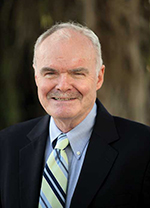
It began with David Bressler, Esq. who represented us in Philadelphia when we made the deal to come to Florida to invest in what was then Pictorial Life, the magazine now known as Gold Coast. We obviously would soon need a Florida lawyer. Dave had contact with an Orlando attorney, who, oddly enough, had been a classmate of my partner, Gaeton Fonzi, at the University of Pennsylvania. But the Orlando attorney felt he was too far from Fort Lauderdale to represent us. He suggested a Fort Lauderdale lawyer named Elliott Barnett.
Now I had relatives named McCloskey, and Don McClosky did not look terribly Irish, and I had never seen that spelling of the name. I soon learned, because he joked about it, that his Jewish grandfather had come from eastern Europe with a name like Mikalofski, or something like that, and the Irish clerk at Ellis Island could not understand his accent and finally said, “You look like an Irish man to me," and wrote McClosky on the immigration papers.
I was also soon to learn that Elliott Barnett, who was from Columbia Law School and had impeccable academic credentials, had founded a law firm with Si Ruden in 1959 after he was turned down by an old line Fort Lauderdale firm when they learned he was Jewish. It was a prejudice common in the community at the time, one that Barnett would help demolish. Don McClosky joined the firm soon after and by the time we met them, both men were well on their way to becoming legal stars.
During the early 1970s Elliott Barnett and Don McClosky exploded the religious barrier that had confronted both a decade earlier. Barnett became a leader in the arts community, helping establish the Museum of Art | Fort Lauderdale, and leading the Downtown Development Authority through a legal minefield after a number of properties had been illegally condemned. Don McClosky, at the same time, was making a name as a premier land use lawyer, at a time when Broward County was growing in every direction. He also got press, some of it in our magazine, for, while pushing 50, playing basketball with a group of high-powered attorneys. Their small law firm was growing fast to become one of the largest in Florida, moving several times to increasingly prestigious offices and spreading throughout the state. At one point it had more than 150 lawyers.
There was a major difference between the men, and that was personal. Don McClosky was married for 59 years to the same woman, Judy, with whom he often traveled and 20 years ago survived a plane crash off Chile. Elliott Barnett had four wives, which can cause economic pressures, and those pressures led to a tragic ending. In the 1990s, when his reputation could not have been more glowing, he was accused of embezzling from his firm, which those who had known him for years could not fathom. I always wanted to believe that it was not as bad as the papers made it seem. His health had broken and he died in disrepute. The firm people had always called Ruden, Barnett, etc. became Ruden, McClosky, etc.
Don McClosky, on the other hand, lived more than another decade of fulfilling years until his death last week. He was increasingly regarded as one of the best in his business, a friend to many, including this magazine, and his obituaries were filled with accolades from those who regarded him as land-use expert, friend, mentor, devoted husband, father and competitive basketball player.
Two brilliant careers, launched almost together, both born in a certain adversity, and ending as differently as if the men had never known each other.

With all the commotion caused by the hurricane that wasn’t, but then became a disastrous storm, an interesting transportation story did not get a lot of notice. As Irene faked at Florida, then veered north to a place in New England history, The Palm Beach Post reported that some talks were going on between the Florida Department of Transportation and the Florida East Coast Railway about the possibility of the railroad taking over Tri-Rail.
The paper reported that it came as a shock to Tri-Rail’s board, which knew nothing of such discussions, and wasn’t very happy about what seemed some kind of sneak attack. An FEC official told us off the record that too much was made of a very preliminary approach to what could be a major transportation development for South Florida.
Whatever. The reality is that, after more than 20 years of a pretty good commuter train on the wrong track, there is serious effort to move Tri-Rail to the FEC tracks and overnight turn a marginally useful commuter service into a very valuable one which would not only serve many more workers but also holds promise of an economic charger for much of Florida’s east coast. The cities from Jacksonville south to Miami owe their locations primarily to the FEC. Its tracks bisect the business districts of every town along the route. The tracks Tri-Rail and Amtrak now use are on the more westerly CSX tracks, which miss the downtowns by just enough to make it an inconvenient commuter railroad.
Illustration: A commuter from Palm Beach County to Fort Lauderdale recently times a morning trip. It took about 32 minutes to travel the 19 miles from Boca Raton to the Tri-Rail station on Broward Blvd. Then it took almost exactly as much time waiting for a connecting bus, then crawling for 17 minutes for just one mile through morning rush hour traffic to the heart of the Fort Lauderdale office district, then another eight-minute walk to his office.
That Tri-Rail is on the wrong track was obvious from its inception. Ironically, it was forced to use the CSX tracks because at the time the FEC wanted no part of a commuter system. It had given up passenger trains in the 1960s and, with a busy freight railroad, wanted nothing that would interfere with their money-making mode. However, the railroad was sold and it has been apparent for several years that the new owner actually wants passenger traffic. Thus, Amtrak has been flirting with the idea of switching its long distance trains to the FEC. On paper that makes sense, for its track is a straight line along Florida’s east coast, whereas the present CSX track veers from Jacksonville to the middle of the state before returning to the coast in West Palm Beach.
The problem is that FEC’s track has many crossings, especially in the cities along its path. To have efficient Amtrak service, or Tri-Rail, that railroad needs extensive improvements. They would include, eventually, either a high bridge over the New River in Fort Lauderdale, or an expensive tunnel. In either case it would eliminate grade crossings that slow traffic on busy downtown streets. Therein lies opportunity, and the FEC certainly realizes it. A fast commuter service, with Amtrak as a bonus, would generate real estate development near every station. Air rights above the tracks would be valuable, just as they are in northern cities which long ago put railroads either up or down to avoid traffic. Long term, the economic benefits to South Florida, and the FEC, could be enormous.
Now, after years of staring at the obvious, it appears the 21st century is on the brink of happening.

Anyone following the news recently has been reminded that the gap between the very rich and the very poor is growing. That’s as it should be. The rich are rich because they are prudent, go to Harvard, buy Wayne’s stock, marry well and have the good sense to inherit money. And never spend a dime.
The poor, not all but a lot of them, should never have been born, from parents who should never have been born, grow up without fathers and have brains like a scrambled egg. I stole that last image from Jimmy Breslin, who would not agree with anything else in the sentence.
Part of the “rich are richer and the poor are poorer” story is the alleged disappearance of the middle class. We are told we have no more middle class. Why? Pondering that great mystery, I go back to roots in Philadelphia where my family was middle class. Maybe even not that good. Maybe lower middle class. We were never utterly broke. We had the most expensive Lionel set in 1950. But my dad did not have a car, was always in hock to a loan company (although I did not know it then) and my mother was one of the first working moms of that era. She took surveys, going around door to door, asking people what they bought – and why. Market research. One Saturday she hired our whole neighborhood to stand in front of Thom McAn shoe stores and count the people coming out with packages. I did that from 9 to 5, at the store near Germantown and Chelten. My buddy Miles went to a store near Broad and Erie, and counted for an hour and then went home and made up the numbers. He was close.
We were middle class, and what happened to my middle class is that we became the mildly rich. And we thus disappeared from the statistical radar. Examples: My two brothers were Ph.D.s. Both had college scholarships. I was the dummy of the family. One brother was a consulting civil engineer and teacher at an Ivy League school. He bought stock, and wisely, and back in the 1970s when our company needed help he sent $25,000 overnight. The other brother also taught college – economics – and is not hurting.
These guys are typical of my middle-class friends. In those days the term “millionaire” meant something. Today it means two houses, even in a depressed real-estate market. Looking back, I can think of almost no friend who is not far, far better off than their parents. Almost all could ship you 25K overnight; most, if they had to, could raise $200,000 for an emergency.
One buddy grew up in a row house with five siblings. He became a Ph.D., taught college, and has been retired 10 years. Another row-house product organized a division for a major company. He had two houses, one in suburban Philadelphia, the other on the beach at one of South Jersey’s better addresses. Another friend, whose dad, like mine, sold life insurance, and not too much of it, became publisher of an important trade magazine. He has been retired for years and splits time between a tony north Jersey suburb and Long Beach Island.
These are just the Philly connections. Closer to Florida, I can’t list the number of people who came from ordinary circumstances, from all over the country, people whose family income a generation or so back never exceeded $15,000, and who today could lose that in the morning market and hardly notice it. By Florida standards, they are not super rich, merely comfortable.
They are the former middle class. They have not disappeared. Just moved up in class.

The Carolina morning started beautifully, then it rained, then the sun returned, then it rained, then somewhere there was the sound of a jet invisible above, then the sun came out again and then began to decline after dinner and some distance to the west there was the Iowa Straw Vote and the TV was following the action. What we saw was a person we thought was Tina Fey doing an imitation of Michele Bachmann. It was amazing, how she manages to look like these people and makes you laugh mostly by quoting stuff the women have actually said. “I can see Russia from my house.” Well, a lot of people can do that, depending on what they are smoking.
We were screaming to the wife to come see this hilarious imitation, when, to our surprise, an announcer appeared and we realized that this was not a female impersonator. What made us think so was the style and content of her speech. She was gesturing wildly and God, she was using the word God every other God knows word, like God I love God, you love God, and I love you, I love you all, by God, and God willing and God bless America and I hope that God breaks Rick Perry’s freakin’ legs…
It is, of course, unfortunate that Newsweek’s cover made the woman seem deranged. She is simply playing to what Jimmy Breslin referred to as “a low IQ” audience. Actually, Jimmy referred to low IQ states, which included any state, usually southern, that wasn’t up to his high intellectual standards. In this case, however, it was only a fraction of Iowa people involved and these were pious souls, God fearing by God they are, offended by ungodly conduct and ready to cheer any God-fearing woman.
Some people find linking God and the flag distasteful campaigning, in the spirit of Richard Nixon at his worst. Remember the parody from some 50 years ago: “I’m glad you asked that question. Pat and I were talking about it at home the other night in front of the fire. Pat was knitting a flag; I was reading the Constitution...”
Of course, Nixon was a God-fearing man who would never lie unless he had to. He was in the great spirit of American family values which has marked so many of our distinguished presidents. Rarely has a president questioned the value of having God in his camp. Abraham Lincoln, in the depths of the Civil War, mused that both sides prayed to the same God and he wondered how God could be on both sides at once. But he made up for this blasphemy in his second inaugural. “With malice toward none, with charity for all, with firmness in the right as God gives us to see the right…”
Note that Lincoln did not say he loved God, or that God even liked him; rather, like John Templeton, who has his name on a Fort Lauderdale building, praying before financial decisions, he hoped God would send the lights of his better angels to clear our collective minds in a time of turmoil. Other presidents, while not so eloquent as Lincoln, have consistently boosted family values, which is God’s way. President Clinton managed to leave office with a surplus, largely because he valued family values. Harry Truman put a nice spin on religion when he vowed to “give em hell.” Gen. Sherman came on a little stronger – he declared that war is hell, and had little time for preachers. However, he kept his wife at Notre Dame throughout the war and God, who is a big Fighting Irish fan, permitted him to march through Georgia without the devil to pay. And the great John Kennedy proved that spreading love around – a little to a movie star, a little to a mobster’s girl – did not impair his judgment when it came to avoiding nuclear war.
The beat goes on. In many parts of Florida it is almost impossible to get elected unless you praise God and favor carrying assault rifles openly to church. And our legislators in Washington carry on the great tradition of family values, personified by the Palm Beach congressman who loved little boys as well as himself, and after he lost, was replaced by another dude who beat him on a family values plank and proved his sincerity by using his plank with as many families as possible.
Oh my God!!! The wife just turned on Chris Matthews, who stupidly doubts that JFK was murdered by our own government, and he’s ranting about Rick Perry and he just said, swear to God, that Perry is selling the Tea Party “no taxes” line like a religion.
And that’s the God’s truth.

Our family has a long history of anticipating seismic changes in culture and lifestyle, and investing to capitalize on trends. For instance, a long-gone relative studied European politics and when he saw Hitler rise to power in Germany, he predicted that a major war was coming. Another relative deepened the research by realizing that air power would prove decisive in any future war. Thus the family invested heavily in Messerschmitt.
Years later, when the fax machine appeared, a distant cousin decided to figure out a way to fax people. The idea was if documents could be fed into a machine and sent all over the world, why not do the same with people? It would be so much faster and efficient than existing modes of transportation. Consequently we sold all our airline stock and backed his machine. Years of experimentation have not yet borne fruit, but the concept just needs tweaking. The main problem is that when you feed people into the People Fax they flatten out OK, although a little gooey, but it is difficult to puff them up again on the other end.
The project is stalled, but not dead. Often an inspiring idea does not fulfill its projected destiny, but spawns an even more productive idea. Thus with plastic grocery bags, which are losing favor because of environmental concerns, but may have found a niche in making parachutes for toy soldiers.
Another such opportunity looms on the horizon. News reports recently proclaimed that the driverless car is not far down the road. Experts say the technology exists, based on all this GPS stuff that is already helping navigate everything from mega yachts to skateboards. You would just get in your car, turn the ignition, and sit back. The car would drive itself, stopping automatically as other drivers tried to bust red lights, avoiding getting too close to other vehicles, finding a parking spot closest to your chosen terminal at airports, etc.
It is predicted that this technology would reduce accidents by 80 percent, which would be a wonderful thing, and the key to making money on this advancement is figuring out what other businesses would tend to profit or be eliminated when this concept becomes reality. Red light cameras, for instance, hardly in their infancy, might disappear the way buggy whips did when they figured out a way to put steam engines in buggies. Oddly enough, the whip business was not entirely killed. An entrepreneur in New Jersey, who was rumored to be the great uncle and a great aunt, had a lifetime supply of buggy whips. To save his company, he invented harness racing.
Lovely at it seems, driverless cars might create problems, and those problems might lead to creative solutions. Lawyers for drunk drivers are already opposing the idea as unconstitutional, because people could be in driverless cars, tight as a tick, but it would make no difference if they were impaired. Besides, if they let the car drive itself there would be no reason for a cop to pull them over.
But therein may lie lucrative opportunity. It is a given that driverless cars would be safe, obeying the speed limit and not doing stupid things such as crossing lanes on I-95 and texting while drinking coffee. But would people stand for it? We think not. For too many people the thrill of driving like maniacs is all the fun they get in life. They would figure out a way to override the driverless technology, and go racing at 90 miles an hour up U.S. 1 as always. That predictable situation may favor the prepared. With most cars obeying the rules because they have no choice, the bad drivers would be in constant road rage, passing and screaming curses and launching foul gestures at all the driverless fools slowing them down. They would need guns to shoot such fools, and they would need laws to protect them.
This would be wonderful for the gun business, especially in Florida where the legislature favors laws that punish municipalities and their officials who enact laws controlling guns and doctors who ask crazy people if they own guns. This legislature would surely understand the need to protect maniacs who fire AK-47s at the drivers of driverless cars, especially if they feel threatened by sane people.
But we better move fast and get this driverless car on the road. There’s little likelihood of it happening soon, but you never know when sanity could return to Tallahassee.

We sometimes wonder if people know why they vote for the people they vote for. But during the recent debt crisis debate, we wondered even more wonderfully if people who get elected to go to Washington know why they got elected.
The phrase “doing what the people back home sent me here to do” was repeated so many times in the last few weeks we wanted to scream at the TV, “How do you know what the people back home think?”
Case in point, starting at the top. President Obama got elected in 2008 when he made eloquent speeches talking up “change.” But did he understand what the people who voted for him understood him to mean by that vague inspiration? Especially when so many people who never voted before voted for him, and when black voters appeared at the polls in record numbers and voted overwhelmingly for him. Were they voting for change in the color of the man at the top, to be part of a historic social event, or were they voting to change the health care and insurance systems and promise everything to everybody and not worry about paying for it?
It reminded one of the 1960 election when an Irish-Catholic ran on a platform that he wasn’t satisfied that the Russians had beaten us into space and we needed to catch up in an arms race with those who would wish us harm. Did people ask if that arms gap claim were true (it turns out it wasn’t) or did they vote for JFK because he was an Irish-Catholic who had a gifted speech writer? We worked the polls that day, and our precinct in Philadelphia, which had a large Catholic population, the faithful voted early and often. Something like 75 percent voted for the Irish-Catholic. Astute observers did not think the arms gap carried the day.
Back to the future. President Obama clearly thought his victory was a mandate for change. But change to what? Did it occur to him that many of his constituents wanted change back to the past, before 9/11, before the housing bubble when real estate only went up, when everybody had a job, before the Wall Street scares, before media images of young soliders coming home with cold, jarring metal rods where their legs used to be?
If it did not, then last year’s election should have. In that mid-term contest, as usually happens, the opposition party made a comeback, partly because that is the way of politics, but also because many of those those first-time voters who supported him in 2008 did not turn out. Maybe they were disappointed that their idea of change, which actually meant better times, had not been realized. Or maybe they just didn’t bother to vote.
Whatever, the result was a bunch of new people in Congress, and we suspect the cycle repeated itself. The Tea Party winners thought they had been sent to Washington with a mandate to change government. But did those who voted for them know what kind of change they wanted? Maybe they just were against expanding entitlements, or giving jobs to illegal immigrants. But did they want the kind of mania that obsessed the country for the last few months, with possible long-term consequences for the economy that could hurt everybody? Did they want to stop their social security checks, kill Medicare, drive their stock portfolios down, deny soldiers pay, deny Depends for grandma?
Some may have wanted all these things, but probably most only wanted to rein in big government, at least fake at balancing the budget, get people working again, ban red light cameras, fly the Confederate flag on Memorial Day. The danger is that you don’t always get what you thought you voted for, if you knew in the first place.
Bottom line: Get rid of the word “mandate.” Unless you speak of Mandate the Magician. And even he was not tricky enough for these political times.
The Decline and Possible Fall of the Rupert Murdoch British Empire may seem unbelievable to some. How could a leading newspaper commit the acts it did, hacking people’s messages, bribing law enforcement at the highest level, at the same time becoming so influential that the most powerful people in the country treated its owner as uncrowned royalty? People knew this was going on. Why no complaints for so long? Did the newspaper staffers who did these things believe they had the sanction of their employer?
Well, by way of understanding, if not explanation, it isn’t the first time. You may chalk it up to corporate culture, for want of a better term. We were reminded of this last month, when going through old files at Philadelphia Magazine, where we started out in the magazine business and in the process played a bit role in the invention of city/regional magazines. Such magazines are everywhere today, but this was not the case in the 1960s when Philadelphia showed the rest of the country what a fringe media could do for a city. A book is under way on the subject, and Philadelphia Magazine is a big part of the story.
That magazine goes way back, almost 100 years now, as a chamber of commerce publication that nobody read. That changed, however, in the 1960s, when the editor and publisher realized that a publication directed to a small business audience had the potential to grow into a new media form that in some ways was more influential than the local newspapers. It was so influential that today some people give the magazine credit for driving out of the city a man who at the time was one of the most powerful figures in the newspaper world. He was Walter Annenberg, whose name today is recognized as a major figure in education philanthropy. That is a worthy distinction, but quite different from Annenberg's reputation as a newspaper publisher.
In that time he owned two of Philadelphia’s three daily papers, along with magazines including Seventeen and TV Guide. Like Rupert Murdoch, he was an intense competitor. Like Rupert Murdoch, he was feared and befriended by the most powerful people in his city. He could also be petty and vicious. He was known to have people he did not like airbrushed out of photos, even when they posed with the president of the United States. He all but boycotted the Philadelphia 76ers basketball team in its early years. His Philadelphia Inquirer ran a story with a headline reading that a candidate for governor had denied being in a mental institution – even though no one had said he was.
In that culture an enterprising and long-term Inquirer reporter named Harry Karafin saw opportunity. Karafin was known as Walter Annenberg’s hatchet man. When Annenberg wanted to get somebody, Harry Karafin was his hit man. Karafin figured out a way to live well on a newspaper reporter’s salary. And that was to write stories in The Inquirer suggesting that an investigation of some business was under way, then send a crony into the business and suggest public relations might be in order. Over several years Karafin got himself on the payroll of a number of businesses. Among his victims was the largest bank in that part of Pennsylvania, which paid his PR company more than $60,000 over five years. Serious money in those days. People paid off because they assumed that if Harry Karafin were on a story, Walter Annenberg was behind it. In fairness, nobody in Philadelphia thought Annenberg knew what Karafin was up to. But anyone close to the newspaper business knew that Karafin could never operate as he did if a sense of ethics came down from the top.
A lot of people in Philadelphia thought Karafin was a bad actor, but nobody did anything about it. The leading rival newspaper, the stodgy (and long defunct) Evening Bulletin, did not want a feud with Walter Annenberg. Then along came Philadelphia Magazine. Gaeton Fonzi, later a founding partner in Gold Coast magazine, and the author of an iconic book on the Kennedy assassination, quietly tracked Karafin for several years. Fonzi noticed that stories about corruption that he worked on were also rumored to be investigated by Karafin, but nothing appeared in the Inquirer. Fonzi sensed that Karafin was on the take, using the threat of investigations to blackmail businesses.
As Philadelphia Magazine grew in stature, so did the nerve of its management, which permitted Fonz and another Philadelphia Magazine writer, Greg Walter, to work full time on the Karafin story for months. When the story broke, it created a sensation. The whole town was buzzing, but The Philadelphia Inquirer remained silent. Silent, until the story began appearing in the national media, including Time Magazine. Then The Inquirer ran a big story, not mentioning Philadelphia Magazine, suggesting it had uncovered the corruption within its own organization. Karafin was fired, convicted of blackmail and extortion, and died in jail. After that, Philadelphia Magazine grew rapidly. It became a must read for anyone who gave a damn about their city.
Fonzi then went on to write a two-part magazine series, which became a book, on Walter Annenberg and the way he ran his publishing business, explaining how the Karafin scandal was only possible in the culture Annenberg created. It was devastating stuff and within months Annenberg sold his papers to Knight Ridder. Today people who hear the incredible Karafin story wonder how it could have happened at The Philadelphia Inquirer, which won numerous Pulitizer Prizes in the years after Knight Ridder took over. They need to be reminded that it was before that fine organization came to Philadelphia, when Walter Annenberg ruled in fear.
Not too different from the Rupert Murdoch story.

Money can't buy happiness, but it does a pretty good job on elections.
We know this because the media is filled with stories, not about what candidates stand for, but how much money they raised this week. Thus we know well before the next presidential election that Newt Gingrich is not serious about running because he hasn't raised enough money. In fact, none of the candidates have, except those who are going to win because everybody loves a winner, and gives them money. The Supreme Court, in a decision last year, agreed that money can buy elections and voted to permit the richest people and richest corporations to give all they want to candidates of their choice, so that those candidates can then appoint Supreme Court justices who will give even more money to the candidates.
That decision, oddly enough, was reportedly based on the preservation of free speech. If one wonders about the logic there, just remember the old adage: Money talks, so the more money you have, the more talk you can afford.
Which gets us closer to the elusive point, which is that if money buys elections, we should know pretty well in advance who is going to win by simply counting up each candidate's bank account. And if we are pretty sure who is going to win, what’s the point of having an election?
Obviously, no point. And here is where what is now simply an innovative idea crosses the gold bar toward brilliance. Let’s set up the deal so that a month or two before the election, whichever comes first, there be a deadline to determine who has raised the most money, and therefore is the likely winner in November. But, this is key to the scam, at this point none of the money can be actually spent, except for loopholes in the law which permit money to be spent to raise even more money, even if some of that money goes to magazine advertising. With such loopholes – inevitable in any endeavor in which humans participate – there should still be a ton of money left, unspent, untainted, pure as an election in Hialeah.
At this point, much if not all the money should be unspent, except in cases in which candidates spend all their money to get more money, in which much if not all the money will be unspent. That’s a problem, but we can tweak that later. For today’s purposes, let’s assume most of the money has not been spent. So we can then return all the money to the original contributors.
So we have a new president without the hassle of an actual election. The people who contributed money get it back, so instead of going to political consultants and TV ads, it will go to the stock market and taverns, where it should have gone in the first place.
We ran the idea by a constitutional scholar, whose name, oddly enough, is Supreme Kort, and she said the idea made total sense, and was therefore likely unconstitutional. But she said the constitution can be changed, and often is, depending on whose money rules the court.
“Law is about change,” she said. “Nothing is written in stone. It’s written in money, and you can always keep the change.”

It was either late 1959 or early 1960, and, coming off active duty, I was working a temporary job for RCA. We had a traveling program promoting RCA’s stereophonic sound system, which had come late to the game. The presentation included a history of recorded sound, in which RCA had played a dominant role. We traveled with an example of a cylinder record, which preceded the platter style, and an old wind-up horn player and a recording by the great tenor John McCormack, no relation. When we got to the modern stereo portion of the show we played tapes (a novelty at the time) of a variety of recordings, including some first-class orchestral bits, some stuff from Richard Rodgers’ “Victory at Sea.” Then, presumably, we thrilled our listeners with the roar of a race car zooming past, from one side of the room to the other, and the thunderous decibels of a rocket being launched. I added a silly sight gag to the rocket action, a little spring-loaded plastic rocket that I hid behind the lectern and shot off when the sound of a rocket launch was played. They loved it in Bluefield, W.Va., and Tocoa, Ga.
The presentation was baby talk to sound engineers, for whom we occasionally and uncomfortably performed. But most of our audiences were fairly unsophisticated – service club luncheons, church groups and schools, mostly in small towns where stereo was a novelty, and the history of recorded sound was educational. It came to pass that one of those towns was Titusville, across the broad expanse of water from Cape Canaveral. It was a noon show for Kiwanis or some such group and all went well until we got into the stereo portion. As I prepared to launch our rocket, the audience of men, maybe 75 guys, all jumped up as if escaping electrified chairs and raced to the picture window of the restaurant. I wondered what was going on until the room began to tremble, and then across the river we could see the flames of a rocket being launched. I had witnessed military rockets fired, but this was awesome by comparison. This was before manned vehicles, and was hardly a daily occurrence at the space center. My audience could be excused for abandoning the RCA show for a live performance. When things calmed down, our rocket sound demonstration paled by comparison, but the amusing coincidence was not lost on the audience.
That memory returned this weekend when watching the last launching of the Atlantis program, and listening to the description of the historic event by NBC’s Jay Barbree. In the past I have written about notable people who contributed to our magazines over a four-decade history. Larry King, when he was out of work between his popular radio show in Miami and his debut as a long-time talk show host on CNN, wrote a few gossipy pieces when we had Miami Magazine. They were not bad for what we paid him, which was almost nothing. And Bill O’Reilly, at the time a graduate student and teacher in Miami, had a brief, equally poorly paid stint as a film reviewer for the same magazine.
This weekend was a reminder of another, soon-to-be nationally known broadcast figure whose byline appeared in our books some 30 years ago. Actually, Jay Barbree was already a familiar name, at least to NBC viewers. He had been covering the space program almost from its beginning. In fact, he was already at the Cape that day when my spiel was interrupted by the launch. Years later we published Indian River Life, a magazine whose northern circulation limits bordered on the space coast. Some of our readers lived close enough to Cape Canaveral to eyeball the space shot launches. I recall that Jay’s work at NBC was not a full-time job, and he had time to write a few pieces for our books, and was a most valuable contact in the exciting new world of space exploration. He was also a great guy to be around, a class act from go.
Jay was close enough to our operation that it cost him some money. A financial advisor came up with a scheme to take our company public, and Jay bought some stock. It was, in retrospect, a harebrained idea, although had all our shareholders been as honorable as Jay, it might have actually worked. It turned out to be the beginning of legal turmoil that lasted almost a decade.
Under the circumstances, one would think Jay would have nothing further to do with anyone in our company. But several years later he went out of his way to help me reach important sources on a freelance story I wrote for the Sun-Sentinel’s Sunday magazine. Thanks to Jay’s contacts with the aviation community, it was a pretty good piece. I needed the money.
Thus, a rich dose of nostalgia Saturday as I listened to Jay Barbree's NBC colleagues close an era in space exploration, and affectionately salute what may also be the end of a career of a man whose credentials are also outer space. He covered 135 launches, going back to 1957. He was part of an Emmy Award-winning team. He wrote seven books. He was there, close to the pad, a voice of history, in triumph and tragedy, from beginning to end.
Well done.
Sapphire Valley, N.C. – I don’t remember the name of the Fort Lauderdale company that was involved up here in the early 1970s. Was it Real something or Cen something, or something like that? Anyway, the public relations woman representing the developer was Patty Doyle, one of the best, and she set us up in the Fairfield Inn, which was one of the early hotels in the mountains when people from Atlanta began coming up to escape the sultry summers. Later, Florida took over, and it is now hard to go to church or the supermarket without running into somebody from home. Just yesterday, while crossing the main drag in nearby Brevard, somebody in a car shouted my name. I couldn’t make out the greeter, who was crossing with the light and could not hesitate, but the voice sounded familiar. Hello, whoever you are.
That first trip, and subsequent visits over the next several years, were largely working vacations. The Fairfield Inn, sitting above the lake by the same name, with famous Bald Rock looming high above, had all the charm and handicaps of an old building. The virtue of a cozy wooden bar was offset by the fact that it was a fire trap, for starters. The outside fire escapes told the story. The inn is long gone, not deemed historic enough to overcome its aging liabilities. And long gone are the petty ordeals of having to ride up and down muddy, bumpy mountain trails, dodging yellow monsters mauling rock and soil, listening to developers in grimy boots rave about the beauty and uniqueness of their site. It was almost as tedious an exercise as visiting countless newly finished condos on the Gold Coast, each more like the next, pretending to appreciate a salesman’s rave reviews of their own product.
The difference is that some of those Florida condominiums newly completed 40 years ago are considered as obsolete as biwinged airplanes, their small balconies no match for modern buildings with as much outdoor terrace space as interior room, and elevators that open directly into units. For the most part those condos, despite what their authors claimed four decades ago, are architecturally indistinguishable from their neighbors, as look alike as brick row houses in an old city.
The mountains are different. Those developments active in the 1970s have long been finished. Those builders respected nature; all trees which could be saved have been. Now the landscaping, invariably including native mountain laurel and man-sown perennials, is mature. Route 64, out of Cashiers, is lined with such developments, and you wouldn’t turn many of them down. In fact, there are people up here who originally bought places as summer escapes, but now spend at least part of winters here. Those well up the mountains stock up with firewood and food, and on those occasional days when snow blocks the roads, they are content to hole up by the fire, until the roads clear. That is rarely more than a day or two.
Perhaps the most remarkable aspect of life in the Carolina Mountains this Fourth of July is, despite the growth, how uncrowded the place seems. The roads, which have undergone some welcome improvements, are hardly busier than they were 40 years ago. Maybe that has to do with the fact that half the vehicles in the 1970s were construction-related, slow-moving beasts, concrete mixers dripping water, or flat beds filled with logs or bearing earth-moving machines, which created their own traffic jams. Surely there are many more visitors here, but you hardly feel it, except for the busiest times at supermarkets – none of which existed four decades ago. One has to have left South Florida, where roads nonexistent in the '70s are now clogged, often maddeningly so, to appreciate the relative tranquility of a place that physically could hardly be different from flat Florida. Part of the reason – a big part, according to locals – is that water treatment facilities have lagged behind population growth; new developments are being rejected until the situation is remedied. One hopes it never will be. In South Florida, nobody cares about such petty concerns as no water. Buy a politician and the problem doesn’t exist. Leave it to the next generation to work it out.
That is just one reason people from Florida who originally came to the mountains to escape summer heat now tend to stay here to escape everything else. Just about everybody we meet in business here has a Florida connection. The house the family is living in, this fine morning as the birds salute the dawn, was marketed by a man who in the 1970s called Stuart home. The fellow we called on to de-winterize the house moved up from Pensacola. For those seeking to make a living in the hills of North Carolina, the fact that traffic remains little different from a generation ago may suggest stagnation. But that has an unpleasant sound, suggesting decay, the farthest thing from what, to a visiting flatlander, is better counted as a blessing.
On the other hand, there is water leaking under the fridge, and the nearest handy relative is 700 miles away. A perfect world incessantly recedes before us.