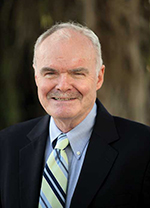
Pete Dexter, today an award-winning novelist, once worked in South Florida. But nobody knew it. Dexter put in time with both the Fort Lauderdale News and The Palm Beach Post. Mary Kloubec, an associate editor of Gold Coast magazine in the 1970s, knew Dexter in Fort Lauderdale.
“He was a terrific writer,” she said years ago, “but nobody saw it.”
Eventually somebody saw it and that somebody was Gil Spencer, former editor of the Philadelphia Daily News. He gave Dexter a column, a break that Dexter says changed his life. He quickly became recognized as one of the best in the business and the rest is history. Dexter was just one of many newspaper people who were influenced by Spencer, who died Friday in Manhattan at age 85.
Spencer was a semi-blue blood by birth. His full name was Frederick Gilman Spencer III, which smacks of the Philadelphia Main Line, but nobody ever called him anything but Gil. A colleague once described him as that rare delight, “a fallen aristocrat.” He went to good high schools, but never went to college. Instead, after serving in the Navy in World War II, he started his career at the Delaware County Daily Times, at the time in Chester, Pa. You will never mix up Chester with Bryn Mawr. He left that paper shortly before I started there as a sports writer. But I did get to know the girl he married, who sat next to me in the newsroom.
Before my time in Chester, Spencer had worked with Gaeton Fonzi, who later got me into the magazine business in Philadelphia and was a partner in our company when we came to Florida in 1970. Gil Spencer moved up to editor of an influential Philadelphia suburban weekly, the Main Line Times, which is where I first met him. There he turned a sedate paper into a lively read. He worked briefly in TV, and then, in 1974, won a Pulitzer Prize for editorial writing at The Trentonian. That was for exposing New Jersey political corruption, something he specialized in throughout his 50-year career.
His success led to the editor’s job at the Philadelphia Daily News, where he made Pete Dexter the star of a star-studded staff. The Daily News always had a great sports page, and Spencer extended that free-swinging style to the whole paper. From there it was on to editorship of the New York Daily News, where he inherited a columnist named Jimmy Breslin.
This was in the mid-1980s and back in Florida Gaeton Fonzi was working on an interesting story that began with Gold Coast in the 1970s. Margaret Walker, an editor here, was upset her friend Adelaide Stiles, a former Fort Lauderdale News staffer, had disappeared after having been romanced by a fellow who turned out to be a notorious con man. He used the names Michael Raymond and Michael Burnett. At Maggie’s urging, I included Mike Raymond and the Stiles disappearance in a piece on Florida con artists.
Stiles disappearance was never solved, although there was strong evidence that Raymond had murdered her after posing as a financial advisor to steal her modest savings. The poor woman made the mistake of acting as if she had more money than she really had. Raymond was also connected to two other Florida murders, both involving financial scams in which he was adept. In 1985, Gaeton Fonzi, at the time freelancing for Miami magazine, decided to look into Raymond, who was supposed to be in jail on fraud charges. He wasn’t. Fonzi, fresh off five years working for the government in which he connected President Kennedy’s death to highly placed CIA officials, learned that Raymond had a history of avoiding jail by helping the feds catch other crooks. Fonzi discovered that the Department of Justice was using Raymond in Chicago in an attempt to sting public figures in a parking collections scandal. The gig was bribing highly placed officials to get lucrative contracts to collect delinquent parking tickets.
Although the story was breaking in Florida, Fonzi wanted to export it to the Chicago market. He called Gil Spencer at the New York Daily News to see if he could recommend a good Chicago media contact. It was a mark of Spencer’s respect for Fonzi’s investigative record, as well as his own highly competitive nose for a good story, that he asked Fonzi what it was about.
“I didn’t know that Gil and Jimmy Breslin already had some background on the same thing going on in New York,” Fonzi said this weekend. “But they didn’t have anything on Raymond’s involvement with the U.S. attorney in Illinois. When I told Gil what I had and why I wanted a contact in Chicago, he said, ‘The hell with them; we’ll do it ourselves.’”
Gil Spencer broke the story big in New York. Jimmy Breslin jumped all over it. Soon important public figures were implicated, and one of them, Donald Manes, the powerful borough president of Queens, committed suicide. Jimmy Breslin later called it one of the biggest scandals to hit New York during his long career as a columnist.
Gil Spencer left the New York Daily News in 1989 when he disagreed with his publisher over an endorsement for the city’s mayor. But he wasn’t finished. Just a kid at nearly 64, he moved to Denver to become editor of The Denver Post which was in a ferocious battle with a rival paper. Initially suspected as an effete Easterner, Spencer’s profane humor and support for talented writers quickly earned the trust and respect of his younger staffers. Memorial tributes over the weekend on the internet bore datelines from all over the country.
I last spoke to Gil Spencer a few months ago. Although he never worked for a magazine, he was close to us at Philadelphia Magazine. He visited the office often, and everybody enjoyed his humor and advice. He even sent us a few good writers. With that background, I hoped he might write something for the book I am doing on the history of regional magazines. His son, also Gil Spencer and a columnist for the same Delaware County Daily Times where his father started, warned me that the man’s memory was poor. He was right. Gil knew who I was and remembered Fonzi as a great reporter, but quickly added, “I just can’t remember details of those days. I wish I could help, but I can’t.”
At the end he probably did not recall the extraordinary career which influenced so many people. No matter. Those people will remember him as long as their faculties are intact.

In the great past we have written several times about a train called the Downeaster, which runs from Portland, Maine to Boston, where they play hockey. We had the advantage, limited to journalists, of writing about the subject without having actually taken this train. This claim can no longer be made.
Last week, with a purpose to be in Boston relating to the book we are writing on the history of city/regional magazines, we rode the Downeaster from Wells, Maine to Boston, where they play hockey. The ride is a bit more than 80 miles, about the distance from Jensen Beach to Fort Lauderdale, and we only bring that up because a train like this should exist in Florida. The Downeaster has been around since 2001, and in recent years it has been one of the fastest-growing Amtrak trains. It is a cooperative effort between Amtrak and the states of Massachusetts and Maine; it is run by Amtrak, with the familiar patriotic colors we all see, but the tab goes to the states.
The train is so popular that all seats are reserved. We did it by phone and picked up our tickets at the station, a 20-minute drive from where we were staying in Ogunquit. It is the same system used by airlines and is pretty easy, as long as your credit card is good. The train was on time at Wells, and got to Boston about seven minutes late, not bad for a trip that takes an hour and 20 minutes. The train moves along, often hitting Amtrak’s maximum speed of 79 miles an hour. There are a fair number of grade crossings, but many of the crossings are bridged. The track it uses goes back to the old Boston & Maine Railroad, which began operations in the 1840s, before they played hockey in Boston.
This is important because the Boston & Maine was built about 50 years before the first railroads reached South Florida. And yet, like most northeast railroads, grade crossings over the years have been eliminated by either building bridges over the tracks, or putting the trains in ditches (impractical in most of Florida), greatly reducing the hazard of speeding trains crashing into foolish drivers who chance a crossing when the lights are flashing.
We have said before, but it bears repeating, that Florida does not need bullet trains. It needs to rebuild its archaic rail system, eliminating thousands of grade crossings, and making possible the kinds of speeds Amtrak reaches all over the country. We also need to move Tri-Rail, or at least portions of it, from the CSX tracks to the more useful FEC, the track that goes through all the downtowns on Florida’s east coast. It is, in fact, the track that is responsible for those downtowns being where they are.
Back to Boston. The train ends at Boston’s North Station, and the new Boston Garden is built above it. Celtics and Bruins fans make up a fair number of the record ridership. Essentially though, the Downeaster is a commuter train. The attendant at the Wells station said there are about 35 people who every morning board the early train, headed to jobs in Boston. Keep in mind, that’s an 80-mile trip. The entire route from end to end is 116 miles. On our return trip, which left Boston at the rush hour peak of 5 p.m., we chatted with a young fellow, a software marketer, who commuted every day from Woburn, near Boston, to Dover, the last stop before the train leaves Massachusetts.
The train was a half-hour late, a delay caused by an effort at the North Station to repair an electrical failure which deprived the train of air conditioning. The fellow said that kind of thing was unusual; the train usually ran on time. We also had communication with a senior lady who had come up from Miami Shores, making the leg to Boston on the high-speed Acela. She was headed to Maine to visit family, and said she planned to stay as long as possible. She found the lack of air conditioning disconcerting. She kept using the Amtrak magazine to fan us both. Actually it wasn’t that bad. Not for a Floridian. The conductors had the doors open and some breeze came through. She wondered why all our trains were not like the Acela, which had obviously spoiled her. We patiently told her Florida was lucky to have any commuter trains at all, and gave her our usual lecture on how Tri-Rail had the potential to be another Downeaster.
Indeed, Amtrak has been setting up inter-city trains all over the country, and there has been talk of Amtrak coming down the FEC tracks with a train such as the Downeaster, which would make a commute from the Treasure Coast to Fort Lauderdale and Miami practical for some people. But that could not be possible with the present speed restrictions caused by all the grade crossings. Rebuilding that railroad to modern standards is the kind of job where stimulus funds could be wisely used, much more so than high-speed rail that isn’t really needed. Not long ago we asked a man deeply involved in transit planning why such an obvious need, which is now supported by the FEC, was not being served. He smiled and answered in one word: “Government.”
But things change, and in about an hour we will see it. Since leaving New England, this has been a sentimental journey, crossing New York state to the little town along the Chemung River where our family lived from 1939 to 1942. I wanted to prove to the bride that I could still find the two houses where we lived. And now, in Pennsylvania, we are going over to Pottsville, better known to readers as Gibbsville, the town John O’Hara made famous in novels and dozens of short stories. Pottsville does not have a pro hockey team, but it actually had a team called the Pottsville Maroons that played football in what became the NFL. Legend has it that Notre Dame would play in Philadelphia on Saturday, and the next day some of its players suited up for the Maroons. That story probably isn’t true, but it should be.
A lot of people forgtet O’Hara, dead since 1970, but he remains one of the masters of short fiction, and much of it set in Pottsville. There is hardly a house or bar or brothel that O’Hara mentioned that does not have a real model in this place. We wrote about this for Philadelphia Magazine in 1969. At the time many people here hated O’Hara for his depiction of the town. At the time we wrote that Pottsville should thank O’Hara for making such an ordinary and somewhat depressed town sound pretty exciting. We even suggested they make him a tourist attraction, with a statue and all.
Forty years ago that idea seemed absurd, and we meant it so. Attitudes change. Today there are John O’Hara tours of the city. And, yes, there is a statue. Like the Downeaster, we will see it live.

Then, yesterday, it began to change. Here and there the sun broke through, and although the sky was generally leaden, the ocean was tame. The weather news said the storm, a remnant of the great rain which came from the west, was moving out and in a few days it would be the kind of Maine that brings people up from the hot cities. This little place is one of the more popular getaways on this stretch of the Atlantic Coast, long famous for its jagged inlets and coves, dangerous for the seaman, inspiring to the poet on land. It makes one conscious of the uncaused cause, which philosophers call God.
We tend to forget where things are, if we ever knew in the first place. Florida’s peninsula juts out from the rest of the south, but Maine juts out even farther, which is why one awakens to light, thinking it's about 6:30, when in fact it’s closer to 5 a.m. And being about as far north as one can go short of Canada, it tends toward cool, especially along the coast, when the rest of the land is in an oven. The messy weather of the last two days is normal to the natives. But that weather is leaving. We can see streaks of blue in the sky this morning, threatening to break through as the day goes on. Thus Ogunquit.
We are staying in a big old place on Perkins Cove, which is a cooperative between nature and man. The entrance to the cove is pure nature – juts of massive rock, formidable jabbing fists dark at the base where the tide has dropped. Down a few hundred yards the natural rock gives way to mounds of smaller pieces placed by man, here and there a stretch of vertical concrete as if for a bridge. It was put there not so many years ago when man decided this cove had the makings of a resort within a resort. Most of the houses rising above the cove are new, at least compared to the pictures you see in the local restaurants, showing what the place looked like 70 years ago. There you see a rough looking inlet, with little of residences to be seen, one of those spots still common in Maine where the outgoing tide leaves boats stranded on mud, only to be raised twice a day by the incoming tide. The old lobster men had to time their departures and arrivals to assure water. It was this way once, for two small streams (here they flatter them as rivers) came down from high ground with not enough water to prevent a tidal barren much of the day.
That changed at Perkins Cove in the 1940s when the inlet was dredged to permit 24-hour ingress and egress, and in the process building a picturesque little harbor which today is crammed with boats, most of them small working craft, a few with masts denoting pleasure vessels. And that harbor brought development on all sides, beautiful homes sitting above the water, artfully situated on the great rocks, below them and across the small inlet a shopping district with narrow lanes and a collection of stores and restaurants. Last night we had dinner at MC Perkins Cove, a James Beard-recognized restaurant. We never heard of Ogunquit before this trip, but that is not unusual. Old friends who live just an hour away in Massachusetts have never been here. But this is a big country. How many people living in Florida for years have never been to Cedar Key?
Ogunquit might be more famous except for its proximity to a place that politics promoted. Kennebunkport is only a half hour up the coast – a sea bird could make it in minutes – and it's mandatory for visitors to check out the home of the former president, which of course the ladies insisted we do. It is hard to miss. You can smell the secret service. We are happy to report the Bushes are not starving.
This is, of course, a seasonal pleasure. The season is shorter by half than a Florida winter. Some stores in Kennebunkport were not yet open, undergoing remodeling for a new marketing concept to replace a venture which did not survive the recession. We asked a young man how many of these quaint stores stayed open year round.
“They almost all leave,” he said. “I stay open because I do a Christmas business.”
“Where do they go?” he was asked.
“Most go to Florida. A lot of them go to Fort Lauderdale.”
Now it is morning. This is being written on a train, which is just passing through Fredericksburg, Va. Robert E. Lee once courted his wife in this place and three decades later Lee’s boys slaughtered the Irish Brigade in a hopeless attack against Confederates on Marye’s Heights, a hilltop protected by a stone wall. Only a practiced eye from the train window can spot that hill, identified in the distance by a monument or two, but from the elevated tracks there is a great view of the town and the brown and tranquil Rappahannock River just beyond it. The railroad actually figured in the fight. On one flank the Southern and Northern forces faced each other across the railroad embankment, just before the tracks took a sharp right turn through the town and across the river. These tracks were a major railroad in the Civil War, and still are. Inevitably much of the battlefield has been lost to industrial and residential development. One sees no hint of former violence from the train.
The train is running early, almost 90 minutes ahead of schedule, and the reason is that this is the one and only Amtrak Auto Train, which leaves central Florida as soon as everybody is aboard. In this case we jump-started by 15 minutes. The train makes only one stop, to change crews in the middle of the night, so if it runs ahead of schedule there is no fixed timetable to slow it down. In the short time we have been laptopping, the train has rolled through fresh spring-green forests and is now running within sight of the broad Potomac and is approaching the Marine Corps base at Quantico.
We cross rivers, all flowing toward the Potomac, and beneath us there are marinas of pleasure craft gleaming white in the morning sun. The train is arriving at Lorton, the northern terminus, so far ahead of schedule that the crew that unloads the train is not yet at work. But shortly it will be, unloading 251 vehicles, including 18 motorcycles. The train seems crowded, with snowbirds heading north, along with Florida families with young kids fresh out of school and off on vacation. Busy as it seems this day, in fact the train could accommodate another 80 vehicles.
So instead of driving this mad stretch of I-95 leading to Washington, D.C., tired after 1,000 miles behind the wheel, likely bitching up a storm with the bride, we sit, sipping coffee and casually composing this little essay. And wondering why people all over the country can’t do this. The Auto Train has been around since the 1970s, first as a private company that was actually making money when a mound of debt forced it into bankruptcy. A few years later Amtrak recognized a good idea and took over the equipment and service. Among all Amtrak trains, it is one of the few that is generally profitable. The service from northern Virginia to Florida is a natural, with so many snowbirds and vacationers traveling the route year after year. But one would think by now a Midwest train to Florida would be equally successful. The original Auto Train actually tried that idea, but the expansion was not well planned. It only went as far as Louisville, Ky. Another 100 miles closer to Chicago would have helped. Then the management ignored warnings of overweight engines, and a derailment (and lawsuits) followed. As a stockholder in the original private corporation, we are convinced the Midwest train would have eventually worked as well as the east coast train, but what seemed a good idea never had a chance. It lasted only seven months, and helped bring down the train that had already proved successful. End of the private venture. Enter Uncle Sam.
In the last decade Amtrak has launched, with 15 states, highly successful partnerships for intercity travel along busy corridors. These trains, some using the tracks we ride on right now from Richmond to Washington, and on such routes as Philadelphia to Harrisburg and Portland to Boston, are practically long-range commuter trains. They take cars off crowded interstates. So does the Auto Train, with the great added value that people can get back in their cars at the end of an overnight ride. People we have met on this trip are driving on to upstate New York, Long Island and Cleveland.
Thinking globally, imagine the money saved in fuel, and the pollution that doesn’t occur. With the present administration less hostile to rail service than previous shortsighted Republicans in Washington, it would seem the right time to take this good idea and run with it to other busy long-distance routes. One can envision four Auto Trains operating south of Chicago, all from the same large terminal, able to handle more than one train at a time, and directing iron horses bearing cars along lines that Amtrak now serves – toward New Orleans, Los Angeles, San Francisco and Seattle. There currently is no long-distance service from Chicago to Florida. There should be, and it should be a train bearing cars.

Just recently, it has happened twice. Keith Olbermann on MSNBC went out of his way to be controversial, with stuff like the “Worst Person in the World" segment and liberal vitriolic criticism of the enemy political camp. And then he’s off the air, for whatever reason, whether it was for contributing to political campaigns or maybe his boss just didn’t like him. Even more recently, Ed Schultz, whose “The Ed Show” has both a stupid name and an often stupid format, got suspended for calling some right-wing lady a “right-wing slut.”
That is disgusting, of course, especially if it were true, which it probably isn’t, because right-wing folks are fundamentally fundamentalist, and therefore incapable of being sluts. But it is not as disgusting as this trend to compete for TV ratings by sending out personalities whose personality consists of interminable and angry rants against the party or politician on the other side of the fence.
It probably started with Rush Limbaugh, who got rich with the gig, but now everybody is trying to do it. This is different from the casual errors which have threatened other careers, such as Jimmy the Greek, who should learn never say anything for the record while partying, or Howard Cosell, who learned never say anything on the air {“Look at that little monkey run!”) until the bar has closed in the press box.
We speak, rather, of contrived sensationalism. Which is what modern TV is about. One can imagine the producer warming up the star personality.
“Ratings suck. Go out and offend somebody.”
“Like who. Or is it whom?”
“Don’t worry about it. Call somebody a slut. Just get the audience up. Get some publicity. O’Reilly is killing us.”
So the bum goes out and remembers a name and calls a broad a slut. Ten minutes later all hell breaks loose.
“Why did you do that?” screams the producer. “Are you crazy?”
“You told me to,” says the on-air personality.
“I did? I never said that. And if I did, I was only kidding. You’re fired.”
“You can’t fire me. I have three years left on my contract. You owe me $2 million.”
“Good point. Let’s talk about it.”
“Usual place?”
“Twenty minutes.”
“Do you mind if O’Reilly joins us?”

It was late afternoon, cocktail hour, bar time, and Wally was looking up and down Second Street, admiring his conquest, as if he had been the first man to land at Normandy and survive. His tables were out near the street, a little too near we always thought, considering the way the idiots escaping the city parking garage came bouncing over the FEC tracks, not knowing what would lie, or might not lie, 20 yards ahead. A nice fat oak would have been in order to protect the outside diners.
But that is besides the point. To the west, now shadowed as the sun declined, rising above the 1925 buildings a block away with its lower parts shrouded by trees, there stood a salmon-colored wall of something or other, not possible to define from that distance. It was the Broward Center for the Performing Arts, not yet open, but close, and Wally Brewer was one of the first, if not the first, entrepreneur to bet that this building would generate a renewal of what had shortly before been a combination of industrial uses and sleeping-bum-in-the-doorway bars, a community blight.
And Wally saw in that building down the street an opportunity to get aboard first. What he also saw was Bourbon Street, a mimic of New Orleans, filled with action around the clock. It was already beginning to happen. Across Second Street there was new construction, places being built to look like they were clever renovations of old structures but were in fact brand new. It is where Tarpon Bend and its neighbors now sit, their sidewalks often filled with lunch and dinner patrons. Bourbon Street. In fact, the place that Wally opened in 1991, then Wally’s Olde Town Chop House, is now known as Bourbon on 2nd, perhaps an unintentional salute to the founder’s vision.
Wally got off to a good start. Blockbuster Video was just a block away and the lunches were often crowded with its people. The theater attracted pre- and post-play business, which is why Wally went there. When the new Florida Panthers won a big Stanley Cup game, Wayne Huizenga called at closing time to ask to Wally stay open. He was bringing in a planeload of 40 celebrating people. Wally did.
Wally Brewer had a partner who died young, and it turned out to be more work than the veteran owner needed. He eventually sold his place, got it back, sold it again, almost got it back. And it is still there, more of a late-night place, more Bourbon Street than Wally had foreseen. It has been 20 years – hard to believe – since he opened, and now the Broward Center is announcing a more than $40 million renovation, designed to keep it competitive and maintain its reputation as one of the most surprisingly attractive venues for big-time entertainment, especially for a market of this size. People in theater who see it for the first time are knocked out. This kind of class belongs in New York, Washington.
Today, it seems a natural, sitting above the curve of the New River, with a gorgeous evening view of the downtown lights reflected on the water. The location was picked a few years before construction began. Money was needed, and Carl Mayhue is credited as the man who started it all. We were not there at those early meetings, but the story has been told often enough that it must be true. When Carl Mayhue, who died four years ago, proposed that spot for a theater, people said, looking at the tawdry surroundings, “Carl, why this location?” He replied, “This location.” He saw something a quarter century ago that few others did. He probably did not call it Bourbon Street, but his mind saw something like that. Now everybody can see it. Thanks, Carl.

Last week the papers reported the decade-long fight between the historic Stranahan House and the developer wanting to build a high-rise condo almost on top of it appears to be over – with the developer winning. Appeals that began with a terrible legal decision years ago seem to be exhausted.
This marathon case takes on poignancy, at least in this space, because we recently celebrated Fort Lauderdale’s centennial with a special section that included the Stranahan House – the oldest building in the city. It was originally the trading post where the Seminoles came to do business with the newly arrived settlers, the latter coming in increasing numbers as the railroad reached the New River and crossed south toward Miami.
Veteran litigators will recall the location was formerly a Hyde Park Market, which was sold to the developer as part of a package. A market on that site was not a good idea, but when it was built the preservation of a unique part of the city’s history was not as appreciated as it became once redevelopment began closing in on the Stranahan House.
The city decided this important property (Stranahan House) deserved to be part of a park. Actually, a perfect location, more so every time a new high rise rose nearby. The Riverside Hotel built an expansion, right on top of it. Nature begged for some breathing space. The voters passed a bond issue, which, coupled with a private gift from an anonymous donor, provided enough money to give the developer about four times what it had paid a few years before. That money has been upped over the years. The developer, The Related Group, said no and an eminent domain suit followed. And this is where things got smelly.
A public park is a legitimate use for an eminent domain condemnation. Unlike some other cases where eminent domain has been used to knock stuff down to make way for private development, this was clearly a public benefit. The case was set for trial, before the highly respected Judge J. Leonard Fleet. In an unusual development, the judge was even quoted in the paper saying how much he looked forward to trying this interesting case. Then, in an even more unusual move, he took himself off the case, citing an inappropriate event. He did not want to say what that was, but was forced to in court and it turned out he thought he had been offered a bribe.
The circumstances would make that hard to prove, but the mere fact that a seasoned and notably independent jurist interpreted it as such is telling.
Then, to pile the unusual on the unusual, the case wound up with a judge who had a record of ruling against cities in various cases. He had also been reversed in other matters and reprimanded by the Florida Supreme Court. One of the best Broward judges to hear such a case was replaced by the last man you would want in that position.
What happened next was almost predictable. There was no trial. The judge issued a summary judgment in favor of the developer. That, of course, got a lot of publicity, including in Gold Coast magazine, but there was never the outrage that such an event seemed to warrant, especially in view of the circumstances in which the original judge removed himself.
Instead, the case dragged on and on and on. The developer took the position that the legal delay had cost it millions – somewhat dubious, in light of the real estate recession that hit at about the time the building would have come on line. Indeed, the same developer got slaughtered in other buildings. It could be argued that the delay saved the developer millions. And you wonder why, in this economy, the developer, with so many problems, would not jump at an offer to take far more than it paid years ago.
At one point the city attempted a land swap, taking the potential park site in exchange for city land on the beach. The city commission turned that deal down, 3-2. Two of our most neighborhood-friendly commissioners, Cindi Hutchinson and Christine Teel, were the key votes against the deal. It still strikes us as odd that they voted that way.
Much of this long fight has been odd. It is not getting any odder. The smell has only gotten worse.

Bob Norman broke the news that he is leaving New Times for WPLG-TV (Channel 10). This is great news for crooked politicians for I doubt Norman will ever be as effective on television as he has been these last 13 years in a throwaway paper that nobody reads – except for everybody who gives a damn what is going on in government.
Let’s correct that. Most people read Norman (pictured left, 2006) on his Internet blog, The Daily Pulp. That avoided the social stigma of being seen carrying around New Times, which might suggest you read all the lowlife ads that sustain this odd but important paper. The blog drew many comments; in fact the comments were part of the package which built a following as Norman broke just about every important story in recent years. They ranged from abuses at Broward Health (when it was the North Broward Hospital District) to Scott Rothstein’s sensational Ponzi antics, to misconduct by any number of elected officials, some of who are not yet in jail.
Many of the comments were silly, obscene and unfair. They were also almost always anonymous, which made for a forum on public affairs with a sort of candor that is never possible when people are held responsible for what they say. Some of the comments were highly informed. Norman built a network of followers who were also reliable sources. His more provocative posts drew hundreds of comments. Posters sometimes used names of public officials, who usually reacted by saying, “it ain’t me” writing this stuff. It was both the strength and the weakness of the blog. Those Norman outed could always tell themselves nobody reads this stuff, and if they do they don’t believe it. So it can be ignored as Pulp fiction.
Of course, it wasn’t ignored. Norman screamed foul so loud and often that eventually the Broward political system imploded, first with the feds and more recently with the state attorney, who after years of saying “leave that one for the feds” has now become aggressive in rooting out corruption. Some would call that self preservation. Norman ridiculed State Attorney Mike Satz for years, challenging him to do what state attorneys are elected to do, but because they are part of the same club, often find exposing friends an uncomfortable task.
His success led Norman to TV appearances. He’s pretty good, and in his parting announcement he said he has developed a taste for the form. But one of the advantages of working for the New Times was a certain protection from frightened editors, as well as a limited immunity from law suits, on the theory that most people did not take his medium that seriously, so proving damages might be tough. And there’s the advertising angle. Nothing Norman wrote in New Times was likely to provoke massage parlors or sex enhancers to cancel their schedules.
Not so with television. Again, a double edge, for with the clout of a major station comes the danger of alienating the money changers and scaring the station manager silly when lawyers begin calling. It is one thing to appear on screen as an occasionally muckraking celebrity guest and actually do your muckraking on the tube on a regular basis. Bob Norman has obviously thought this through, and it will be interesting to see how it plays out.
One thing seems certain. The weird chemistry that made The Daily Pulp a must-read for many people is gone. Other blogs in New Times never had that following. We also wonder how much money has to do with Norman’s departure. He obviously didn’t take a pay cut. And New Times has been cutting back with the economy. When Gold Coast covered the paper four years ago, its issues sometimes ran over 100 pages. Today, about half that.
Connection?
 It began with the uncontrollable – the terrible tornados that spun through the South and devastated so many towns, including the beautiful college town of Tuscaloosa, Ala. But then, as if seeking escape, all TV news channels switched en masse to one of the most controllable forms of human endeavor – the royal wedding.
 This is the week of the royals, with the big wedding and all the red jacketed, silver helmeted blokes on horses. It is only fitting that we recall Gold Coast magazine’s experience with royals, or something like that. There was a time when it was not unusual to have some obscure royal as honorary chairman of fancy affairs. Prince No Account from Nowhere, or Countess Somebody Unpronounceable, would be fussed over pretty good, although nobody seemed to know exactly who they were.
Thus it was not all that difficult for Prince Michael of Austria to wow Gold Coast society in the early 1970s. The prince (the left-most individual in the photo) would show up at a ball wearing this outfit with so many medals it would make Hermann Goering envious. He was usually accompanied by his equerry, a smiling little beauty himself. Prince Michael made Gold Coast magazine a few times, usually photographed with leading local philanthropists. He particularly liked to be seen at Le Club International on the Intracoastal. Le Club was well named to host a prince.
Prince Michael knew his place. One night a prominent social reporter attempted small talk over cocktails. “Tell me,” she said, “what does a prince do with his time?” His nose took off, and he replied without looking at the woman. “Madame, ladies of the press do not speak to royalty unless priorly addressed.”
Even as he was arranging knighthoods for local chaps and performing other miracles suited for a prince, nobody seemed to question why an Austrian prince often slipped from his haughty tone into what seemed like a New York accent. That mystery was explained when Prince Michael was arrested for running a stolen exotic car ring. It turned out his real name was Michael Waldbaum from Miami Beach. When asked in jail why he called himself Prince Michael of Austria, he replied: “I just thought it sounded better than Michael Waldbaum.”
We don’t recall ever actually meeting the prince, but we did meet another royal from the U.K. He was identified as Prince Edward of the English royal family, and he was in Fort Lauderdale for an event aboard the super sailboat Zeus, which was built for a design speed of 26 knots under sail. Now that is flat-out flying, and we aren’t aware that conditions ever permitted Zeus to hit that speed. Nonetheless, it was an amazing high-tech craft, good enough to attract royalty. The owner of the boat was a prominent Englishman. He ran the money, or something like that.
Well, it turned out that Prince Edward’s real name, for those of us chastened by the Prince Michael saga, was Prince Edward. The real one, and he turned out to be a prince of a guy, extremely good at small talk. Everybody had a picture taken with him, and a typical conversation went something like this:
Prince Edward: “Delated to meet you. And where are you from?”
Meetee: “Here in Fort Lauderdale.”
Prince Edward: “Really. From Fort Lauderdale? “
“Yes.”
“That’s wonderful.”
He made it sound as if meeting someone from Fort Lauderdale in Fort Lauderdale was like encountering a martian in Mexico. But the point is he made everyone feel that it was his undiluted fortune to meet them, a quality Prince Michael singularly lacked.
Everybody left the party saying what a fine fellow Prince Edward seemed to be. The late Joe Millsaps had the best small-talk line of the night.
“What do you say when you meet a prince?” said Millsaps. “Hey prince, if you have a little time, I have a helluva real estate deal you should look at.”