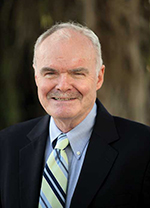
Ten days ago, just a few days before his world exploded, Scott Rothstein was bouncing about a private cocktail party held by one of Fort Lauderdale’s wealthiest couples. We won’t mention the name, as it’s assumed nobody wants his or her name mentioned simultaneously with Scott Rothstein right now. He was dressed in a bright orange shirt that looked like it was custom made for the party. His outfit looked rich, if gaudy. Above all, Scott Rothstein wanted to make sure you knew he was rich. He was loud, as always, and hugging and kissing and patting the backs of Fort Lauderdale’s well to do. He was probably at this party because of his philanthropy (the kind of people who were at this party often met at charity events). Rothstein’s largesse in the charitable community gave him credibility and opened doors to the wealthy, just as his political donations opened doors to the politically powerful. He was overtly pleasant and sociable – until in a side conversation, somebody mentioned something about the press. He blurted out an expletive about the press and made a comment that was filled with irony, even before the events over the last few days, “F--- the press. They never tell the truth anyway.” Rothstein did not care for the press. It was not the first time Rothstein had snapped at mention of the press. They were growingly suspicious of Rothstein, and he hated that. In the past several months, he had done everything short of threatening to kill a local alternative newspaper reporter who was prodding into Rothstein’s doings.
That was Scott Rothstein, hobnobber to the rich and famous. A different side of Rothstein was on display a couple months ago at Charlie Palmer Steak House (no relation to Fort Lauderdale’s Charlie Palmer, who would not want his name mentioned in a Scott Rothstein story, even as a steak house) a chic power broker hangout in Washington, D.C. Rothstein was in D.C. for the swearing in of Sen. George Lemieux. His appearance itself was a bit of a shock as anyone who knows the two knows they are complete opposites in both style and substance. Several Republican insiders questioned whether Rothstein was even invited, or if he just showed up. At Charlie Palmer’s there were two groups of people sitting at tables, both having drinks before a reception for the senator later that night. In Rothstein’s group was Grant Smith (a firm lawyer and son of former Congressman Larry Smith), political operative Roger Stone (who also worked for Rothstein’s firm), and a couple other members of the Rothstein political posse. They were dressed to the political nines, expensive watches, designer shirts, the best suits. The only thing missing was a neon billboard proclaiming they were Washington power brokers. The sign might have been subtler.
At the other table were various past and present staffers, administrators and consultants of the Jeb Bush and Charlie Crist administrations. They weren’t big money guys. Like Lemieux, they had come up through the grass roots Republican Party ranks and were there to celebrate a big day for an old friend. There is a perception that politicians liked and counted on Scott Rothstein for money. The money part was probably true, as few people in Florida wrote bigger political checks than Rothstein, but Republican political staffers were deeply suspicious of Rothstein. Their comments this night included “things don’t add up with that guy,” “stay away from him,” and “where is he getting all this money?”
Rothstein soon approached the table of political staffers and singled out Shane Strum, the soon-to-be chief of staff for the Gov. Crist. “Mr. Strum, may I have a word with you,” Rothstein asked. He pulled Strum aside, put his arm on his shoulder and began to make a pitch for one of Rothstein’s clients. The staffers cringed. It looked like a scene from "The Godfather," and Strum clearly wanted none of it. He politely dismissed the request with one of a thousand vaguely non-committal phrases that all future chiefs of staff tend to master. If Scott Rothstein was giving the impression to the world that he was best friends with the political elite, the reality was far from that. Politicians took his money, and hoped this thing did not blow up on them. In the past several days, their fears appeared to have been realized and the race to return to Rothstein money is on. A half a dozen politicians pledged their returns just yesterday. Much has been made of Rothstein’s Republican connections, but his largest recent donations have been to Democratic gubernatorial candidate Alex Sink. He was often an equal-opportunity spender in his efforts to buy influence.
In the business community, suspicions of Rothstein ran deep. The county’s most prestigious business organization rejected his application for membership. They had nothing tangible against him other than “this guy really doesn’t add up.” The organization consisted of a bunch of Fort Lauderdale old timers who have seen a few con artists in their time. They were the most vocal opponents to Rothstein’s admission.
When Gold Coast magazine recently published its list of “50 Most Powerful People,” we interviewed dozens of Fort Lauderdale’s business and political elite, and all agreed he was powerful, and all were highly suspicious of his ethics and where he was getting his money. Even a great law firm, and great “business interests” don’t produce the kind of money that Scott Rothstein was throwing around town.
So when Stuart Rosenfeldt said two days ago that he was completely shocked Scott Rothstein may have stolen all the money from the firm and some outside investors, he officially became the first person in South Florida to identify himself as not being suspicious of Scott Rothstein. It’s hard to believe partners in that firm could work so closely with Rothstein, yet not wonder where Rothstein was getting all this money and the highly secretive manner in which he appears to have controlled the firms accounting. When you are riding that gravy train, maybe it doesn’t pay to ask too many questions – that is until the train goes off the track.
Remember the Miami Herald? There was a time when the Herald had statewide influence, and was especially strong from Palm Beach south. It certainly set the agenda for Broward County. Alas, it is hardly seen in Broward these days – at least not north of Hollywood where most of the action takes place. That once-honored paper has been in a slow steady retreat toward its namesake city, leaving behind the bodies, still breathing, of a number of distinguished staffers let go in the cutbacks.
We are pleased to report some of the staffers have come to life, joined by a number of other prominent names once associated with other news organizations. Broward Bulldog (www.browardbulldog.org) is the name and is goes online this week as a non-profit site dedicated to filling the void left by the decline of the major dailies. If things go according to plan, Bob Norman of New Times Broward/Palm Beach won’t be the only journalist breaking the juicy stories. Online journalism has been gaining attention, with a big spike recently for the "Daily Pulp" by Norman. Readership has doubled recently since he broke just about all the big corruption stories thrilling Broward County lobbyists. Former Sun-Sentinel political reporter Buddy Nevins also has an interesting blog,
The new group, organized by former Herald reporter Dan Christensen, has impressive credentials. He has spent several months lining up colleagues and financing. He points out the site is a work in progress, depending upon resources. Just because you are non-profit doesn’t mean writers don’t get paid, and this group has some strong names. Buddy Nevins is on the board of directors, along with Kevin Boyd, who was city editor of the old Hollywood Sun (a.k.a. Sun-Tattler) before Scripps let it go. Others are Jonathon King, former Sun-Sentinel reporter who has turned to mystery writing -- with good success. Another is Ellen Soteber, former managing editor of the Sun-Sentinel and more recently editor of the St. Louis Post-Dispatch. She is back in Fort Lauderdale. Julie Kay, president of the Society of Professional Journalists of South Florida is also a board member. You may not see all these bylines, for some are basically surviving in public relations, but their advice and consent is valuable.
The biggest name of all is Michael Connelly, long a best-selling crime story writer. So long that many people forget he grew up in Fort Lauderdale and worked for the Sun-Sentinel before hitting it big in fiction. Connelly was an exceptional police reporter and was part of the team nominated for Pulitizer Prize for coverage of the Delta Flight 191 plane crash in the mid 1980s. According to Christensen, Connelly made a contribution to get Broward Bulldog off the ground.
“We plan to do authoritative local reporting, covering government, politics, education, business, the courts and public safety,” says Christensen. “Our focus will be what’s not being covered by our downsized daily newspapers, and what’s not being covered well. We’ll tell our readers what’s really going on behind the scenes.”
As for Mike Connelly’s involvement, Christensen adds: “He’s a former colleague and although he no longer lives in South Florida, he provided seed money to help us get up and running because he’s aware of the decline of local newspapers and cares about good journalism.”
The Sun-Sentinel deserves applause for its recent series on abuse of the elderly in and out of nursing homes by care givers who have criminal backgrounds. The paper should follow up with a report on another form of elder abuse, not by people called felons, but people called blood relatives. It may be just as common and involve considerably more money.
We hear at least one reporter is already working on one of the more sensational cases. The story of the former Broward County judge who befriended a feeble 80-something and wound up with much of her money, either for himself or his relatives. In this case there is even one of her relatives who is accused in court papers of aiding the judge, and accepting “hush money” in the process. It is about to get bigger. Maybe much bigger in terms of the money involved. Attorney William Scherer is representing the elderly woman and he plays hardball.
The case, if the facts are as alleged, appears to be one of the more outrageous of its class, but it is hardly isolated in South Florida. With so many wealthy old people on the border of dementia, with the strange combination of generosity and paranoia so often present, these very senior souls are natural targets. And unscrupulous relatives are natural predators.
But it goes on everywhere. We recently took a long vacation, making four stops to see old friends in the northeast. In three of the four visits our friends had horror stories about elderly relatives who were ripped off by their own family members, sometimes to the detriment of those in their wills – or who should have been in wills. Wills can be changed, and sometimes changed without elderly people understanding the impact of their actions. You only hear about it in celebrity cases, such as Anthony Marshall, just convicted of having Brooke Astor’s (she died at 105) will changed. But in less publicized cases, would-be heirs constantly have expensive and exhausting legal battles just trying to do what is right. In some cases financial institutions are incredibly negligent, failing to notice obvious red flags in the accounts of some of their longstanding clients.
Old people are suckers for schmooze. They can grow hostile to those actually taking care of them, terrified of being put in "the home," and at the same time they can be influenced by others far away, who ply them with long distance love and occasional sob stories, always with creamy toppings of nostalgia for the good old days when they were young and healthy. It is a serious problem, and while the subject is hot maybe the mainstream media can help contain it.
In a time when many public figures are embarrassing our community, it is well to remember and salute the exemplary life of a longtime Broward resident. Jack Cooney, war hero, successful businessman, family man, community leader, died this week at 88.
Although retired from business, Jack Cooney remained active in civic affairs almost until the end, living with a verve that traces to his early years and distinguished World War II career. Those beginnings were in Minnesota, where his mother died when he was 8 years old. They were living in St. Paul.
“My father took jobs when he was very young in order to transfer in his frosh year of high school to Cretin High, which was the equivalent of St. Thomas Aquinas in our area,” said his son, attorney David Cooney. “He worked his way through high school because he wanted the best education he could get. He played on a champion water polo team.”
Cretin was a military academy and Jack Cooney graduated as cadet colonel, the equivalent of being valedictorian. He won a scholarship to Notre Dame, but declined because he could not afford the room and books. Instead he attended the University of Minnesota. On graduation day in 1943 he wore his military uniform beneath his cap and gown. He was soon overseas.
Mark McCormick, president of this magazine’s parent company, recalled speaking to Cooney about his war experience:
“A couple years back I was at cocktail party with Jack Cooney. At the time Jack was 86 years old, and was known to most of us as a retired business executive turned community activist, a trusted voice of experience and leadership in the business and charitable community.
"I knew Jack had fought in the European theater, and as someone who spends most of his nights watching the History Channel, I was curious about his experience. I asked him what battles he was part of. He replied,' All of them.' There was no braggadocio in his tone. It was as matter of fact as it was accurate."
He landed with the 75th infantry division in Normandy, a few days after D-Day. He was supposed to be part of the army artillery but due to heavy casualties Mr. Cooney would be moved over to the infantry unit.
Soon Mr. Cooney was to replay the part of Alvin York (World War I hero) by convincing a dozen German soldiers with rifles who were hidden in the baseman of a French house to surrender without firing a shot. Mr. Cooney had approached the home alone with only his Colt .45. For this action he was awarded the Silver Star. A few months later he began a short political career. His outfit liberated a Belgian town, Dinant, and his commanding officer appointed him mayor for a week until a local official could take over.”
Years later he returned to Europe to be honored by the city. Taking over as temporary mayor happened several times as the Allies drove toward Germany. Cooney left the army with the rank of major and an impressive list of 14 decorations, beginning with the Silver Star and including two Bronze Stars and the Crown of Leopold from Belgium and the storied French Croix de Guerre. He left the service with the rank of major. Even by wartime standards, his rise in rank was remarkable.
After the war Cooney joined Univis Corporation, where he started in sales and ultimately rose to president. He brought his family to Fort Lauderdale in 1960 and immediately plunged into civic and charitable work. A notable achievement was helping save what is now known as the Honda Classic golf tournament. The tournament had begun in 1972 as the Jackie Gleason Inverrary Classic. Publicist Jack Drury, who represented Cooney for years, recalls the scenario. Says Drury:
“When Haft-Gaines pulled out as sponsor and we lost the Jackie Gleason contact, we were sitting with a tournament and no sponsor. The PGA was going to cut us out. Jack was directly responsible for getting American Motors to sponsor it for one year, then we got American Honda and they’ve been the sponsor for 27 years. Jack was chairman of the board of the foundation. He was always very community minded.”
For almost 50 years Jack Cooney was involved in numerous civic works. Among them were former chairman and long time board member of the Boys and Girls Club of Broward County, and member of the Broward Workshop, the Executives Association of Fort Lauderdale and the local Boy Scouts Council
Jack Cooney was married for 61 years to Peggy. They raised seven children and had 16 grandchildren and two great grandchildren. A mass of Christian Burial will be celebrated on Oct. 3 at 10 a.m. at St. John the Baptist Catholic Church, 4595 Bayview Dr., Fort Lauderdale.