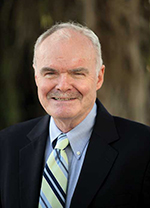
The man’s name was Ryan. We were watching the tribute to former President Ronald Reagan Sunday, getting ready for the Super Bowl, and one of the speakers was a fellow I never heard of named Ryan. The name gets my attention. My great grandmother was Mary Ann Ryan, and we lost touch with her family in Worcester, Mass., around 1876. Her brother Pat owned a bar, and in those days those were the only Irishmen eating well. While listening to Ryan’s speech, which was good, I suddenly saw Robert Kennedy. The shock of hair, the quick nervous flashing smile, the rapid staccato delivery.
And thinking of Robert Kennedy, I had to think of his brother, the president. And the quarter-century link almost nobody remembers between JFK and Ronald Reagan. President Reagan, as this tribute reminded us over and over, gets credit as the man who brought down the Berlin Wall and ended the Cold War in the process. But what few people remember, because few knew it at the time, is that President Kennedy tried to do that very thing almost 25 years before. In fact, in distributing credit, President Eisenhower should be noted as well. Eisenhower realized the enormous dangers of nuclear war inherent in the mutual hostility between the United States and the Soviet Union. As his second presidential term was ending, he was attempting to reach out to the Russians with a summit meeting when in 1960 the U-2 incident, in which an American spy plane was shot down over Russia, spiked the deal.
Eisenhower, in his parting speech to the American people, warned of the dangers of “the military industrial complex.” That seemed like a vague notion, and not a lot of people understood the message. Eisenhower surely did not mean it as a warning to his successor to watch his back, but that is how it turned out. We now know that by 1963, President Kennedy, having experienced the Bay of Pigs fiasco and the stress of the Cuban Missile Crisis, had determined to thaw relations with the Soviets. He distrusted his intelligence community and much of the military high command, who he sensed wanted a showdown with Russia while we still had more nukes. He actually spoke privately of dismantling the CIA. He had established his own back channels with Soviet leader Nikita Khrushchev, and like Eisenhower before him, was seeking a way to end the Cold War. He took that effort public, though few recognized its importance at the time, in his American University speech on June 10, 1963.
Recent researchers, in books such as James W. Douglass’s JFK – The Unspeakable: Why He Died and Why It Matters, have provided context. Kennedy at the time was greatly admired by the public, but (it still shocks some people) was hated by the intelligence community and some of the high military brass. They were furious at his failure to back up the Bay of Pigs effort, followed by his secret agreement to pull missile bases out of Turkey in return for the Russian retreat in the Cuban Missile Crisis. It looked like a great victory for the U.S. at the time, but insiders knew it was just a trade off. There was also a sense that he might pull out of Vietnam. That brave and conciliatory American University speech was one of the last straws. In wonderfully crafted words, he was asking the Russians to come to the table. It took years to be revealed, but there is evidence the Russians were listening. However, it was exactly the kind of language that powerful forces in our government did not want to hear. It helped convince them that JFK was a traitor who needed to be eliminated. A few months later he was.
The great irony is that JFK’s policies and actions were similar to what Eisenhower’s would likely have been under the same circumstances. Eisenhower, having seen war on a massive scale, was not anxious to engage the U.S. in random military adventures. He had gotten us out of Korea as fast as possible. He was wary of involvement in Vietnam. He had sought the same peace process three years before JFK.
Reagan is remembered as a hero for ending the Cold War. Kennedy was murdered for trying to do the same thing. History should salute them both.

It was the best of times, the summer of 1970 when we first came down to buy Gold Coast magazine. We had to move fast. There was no time for exhaustive research, but the market sent the message. Construction was everywhere. The Galt Ocean Mile was a row of cranes sticking their steel necks high into the sun. Houses and condos sold as fast as they could be announced. A classy fellow named Merritt Taylor had sold his Philadelphia suburban transportation company for a bundle and plunged it into real estate down here. He bought a condo development, land out west and beachfront property all the way up to Hutchinson Island. “Land banking,” he called it.
As proof of the reality of this boom we took back Sunday copies of the Fort Lauderdale News and The Miami Herald and dropped them on a table in front of our investment group. They were so heavy the table nearly exploded. This could not miss. Well, just four years later the area had one of the highest unemployment rates in the country. We recall only Flint, Mich., was ahead of us. There were condo units for sale everywhere. Banks were foreclosing left and right and slashing prices to move inventory. Some people got great deals. And some people lost their shirts.
When he was on that buying spree we heard some smart people say Taylor was paying too much. We think he joined a lot of people whose deals did not work. He left the area and I never heard from him again until his obit appeared a few years ago in The Philadelphia Inquirer. It was weeks after his death, which tells you something. There was some stuff about his Philadelphia transit company, but no mention that at one time he was a player in Florida real estate.
At the time one of the most prominent real estate people in town told me that during that period in the mid-70s all but three of the biggest builders in Broward County either went bankrupt or sold in distress. We felt it, too. We had to sell Miami Magazine, and we were forced to take a small payment on a big advertising bill from a company that busted out in Palm Beach County; a company with a big Philadelphia name for which I had worked a college summer construction job. Ironic. We took a beating from a number of developers and learned a new term: “deed back in lieu of foreclosure.”
At the time we thought Florida would never see another real estate market like that one, but we sure did. Two of them were in the 80s, and now the last three years. How bad is it? Well, we give you Glenn Wright. People hated what he built a few years ago. He knocked down some cute smaller houses and replaced them with McMansions that made the people next door feel like they were living in servants' quarters. Worse still, he seemed to be making a fortune. Worse than that, he made other builders think they could do the same, and they did. Our neighborhood got hit hard. “Land usury,” said an offended architect and neighbor, watching builders force big houses onto small lots, eliminating lawns, sometimes cutting down old trees and butchering ancient oaks to make room for their tall, wide shouldered houses.
It, of course, caught up to them. Wright has been in the papers for two years, with numerous suits from people who paid for big houses he never built, all kinds of foreclosure news and a disaster in his major development. Phones unanswered. One report had him $100 million in debt. And now he gets arrested, accused of stealing $20,000 in homeowners fees from people who moved into his distressed development. Not that we bleed for him, but maybe he needed the money. He isn’t the first.

Ed. Note – Due to technical difficulties, which means it was too hard to edit comments, a number of interesting comments on various subjects, some dating back a month or more, were never published. They have been now, under the appropriate blog. We originally set this system up to avoid profane, libelous or utterly silly comments that we have seen on other popular blogs. In fact, most of the comments here have been civil and intelligent, but we will still watch to make sure things don’t get too rowdy. Hopefully, with some system tweaking, we will be able to publish comments in a timely fashion.
There were more than 16,000 of them built. Only one still flies. Last weekend it flew into Fort Lauderdale’s Executive Airport. We write of the famous Consolidated B-24 Liberator Bomber that along with the even more famous Boeing B-17 Flying Fortress were America’s heavy bombers in World War II. This was courtesy of the Collings Foundation, which preserves a handful of classic warbirds and tours the country on its “Wings of Freedom” program.
There was also supposed to be a B-17 there, but when we arrived early Sunday morning there was no B-17. It had engine problems and was delayed arriving. I was there with the grandkids who like to build models and are currently working on a B-17. Seemed like a nice idea to show them what a real one looked like and remind them to be sure to paint the underside gray, as the real plane was. I tell them I flew a B-17. What I do not tell them is that I was just a media guest on a flight a few years ago from Stuart to Vero Beach. But I was in it. That’s flying, right?
Anyway, we walked around and inside the big bomber – and it’s big, even by today’s standards. The private planes taking off from Executive that morning seemed miniature in contrast. Compared to the B-17, the B-24 had a wide fuselage and early in the war it was used mostly as a transport, of both men and supplies. In early 1942 that was more important than bombing. But those planes, in the bomber mode, were so filled with equipment that the compartments for the crew seem small and cramped. You wonder how anybody, burdened with heavy clothing and a parachute, managed to get out from small hatches. A lot did. More than 33,000 men jumped or crash-landed in crippled planes over Europe alone. Not everybody made it. A staggering 30,000 men also died and 13,000 were wounded. Not all of them flew the big bombers, but many did.
We knew some of those brave men (all gone now) who as very young guys pioneered a new form of warfare – strategic bombing. Former associate publisher of Gold Coast, John Broderick (he’s still with us), had a late brother-in-law, Bob Barnes, who was co-pilot of a B-24 with the 15th Air Force. His pilot was wounded on a mission, and Bob brought the damaged big bird home. For that he won the Distinguished Flying Cross. A former salesman, Ambrose Hussey, was a tail gunner on a B-17 and bailed out over Germany. John Collins, associate publisher from 1970 to 1985, married a woman whose first husband died in a B-17 over Europe.
As usual, some of the men who flew those planes when it counted came around to see their old metal friends. The youngest among them are in their mid-80s. They are fewer every year. Like Civil War canon, their weapons will outlive The Greatest Generation.
In the dark night of the soul (which F. Scott Fitzgerald held to be 3 a.m.), I sometimes lie awake and read the Philadelphia Inquirer online. Last night I was stunned to see a big obit for Marty Casey, who died last week in Miami. It was more than strange to see the length and detail in the obit, for today few people in Philadelphia would even recognize his name. But the byline explained it all. It was written by John Dorschner of The Miami Herald and obviously picked up by a Philadelphia editor fascinated by Marty Casey’s background and the vague reference to his having been born in Pennsylvania. He was a soldier of fortune who participated in anti-Castro and anti-Duvalier activities in the early 1960s. He married a Cuban American, was fluent in Spanish and lived in Little Havana. He also dabbled in writing, freelancing for Soldier of Fortune Magazine, and at least once for the Herald. He also helped journalists, including a writer for TIME Magazine, with investigations. That’s how the Herald knew him. I knew him because we grew up on the same block in Philadelphia and as kids were in each other’s houses all the time.
Marty Casey’s adventures got him in trouble. He went to jail for participating in an attempted bombing of the presidential palace in Haiti. It was a bizarre mission, using homemade bombs which missed their target. He was also caught training Cuban commandos in the Florida Keys. He was picked up when U.S. Customs and Border Protection raided the training camp, one of the incidents that infuriated the CIA and made them hate President Kennedy. A former Marine, Marty was obviously connected to the CIA, although not directly. That’s how the CIA operates. He also did another service to his country, but did not know it at the time.
Backtracking a bit, I lost contact with Marty after he entered the service, but my cousin, who lived next door to him, stayed in touch with his family. I heard about him again when he got press in Florida for participating in that crazy effort to bomb "Papa Doc" Duvalier’s palace. I don’t recall exactly how we reconnected, but I think he called me after seeing our magazine.
At about that time (1975) Gaeton Fonzi, then a partner in our magazine, was hired by Pennsylvania senator, Richard Schweiker, as part of a reopened investigation into the death of President Kennedy. Schweiker suspected the accused assassin, Lee Harvey Oswald, was involved with the U.S. intelligence community. I mentioned to Fonzi that Marty Casey, with all his anti-Castro Cuban contacts, might be helpful. Fonzi, at Schweiker’s urging, was trying to penetrate the murky world of Cuban anti-Castro intrigue. We got together for lunch in Fort Lauderdale, and Marty amused us with some of his soldier of fortune tales. He was a serious patriot, and the stuff he did was clearly dangerous, but he made these missions sound like the antics of high school kids.
Fonzi was telling people he was looking into the CIA (there was an investigation going on at the time), but not the JFK murder. However, he told Casey his real mission. Marty went to work and quickly sources began to call Fonzi. One source led to another. Soon he was in touch with a highly respected and credible Cuban named Antonio Veciana, who had been heavily involved in the anti-Castro movement at the time of the Kennedy assassination.
Not realizing that Fonzi was part of the JFK investigation, Veciana inadvertently told him that he had seen his longtime CIA handler, who used a code name, with Lee Harvey Oswald in Dallas before the assassination. It was a stunning revelation – the first time any connection between Oswald and the CIA had been established by an inside source.
Fonzi said today it all began with Marty Casey.
“Marty was the key,” said Fonzi. “He knew everybody, and he wasn’t a bullshitter. He finally got the attention he deserved.”
Gaeton was eventually able to identify the CIA man and the result of his work was two long magazine articles in Gold Coast magazine in 1980 which strongly suggested that an American president was murdered by his own government. Others had suspected the same, but Fonzi was the first man working for our government, with access no previous writer had to dynamite material and sources, to raise such dramatic doubts about the "lone assasin" conclusion reached years earlier by the Warren Commission. Further research produced the 1994 book The Last Investigation which was updated and republished three years ago. Virtually every important book on the Kennedy assassination cites Fonzi for his landmark work.
Not for his bizarre and sometimes comical adventures as a soldier of fortune, but for his pivotal role in guiding Fonzi to the CIA connection 35 years ago, should old neighbor Marty Casey be remembered.

Because I hold certain positions on subjects such as immigration and government entitlements for people who can’t afford health insurance, but can afford new cars and all kinds of gadgets, I am sometimes accused of being a conservative. I am not. I don’t think I am a liberal either. I think I’m a flaming independent, just like you. But since it is mandatory to put people in categories, I do hold some self-evident liberal positions.
One is that we need to save our environment, and when it comes to fights such as saving what is left of the Everglades and protecting our water supply, I am on the side of the people against the polluters. And from the first day I was given an opportunity to express opinions, I have been firmly on the side of the people versus the gun nuts. That puts me on the same team as virtually every law enforcement agency in the land, and cops, you may know, are generally not great liberals.
We think, obviously, of the weekend tragedy. A clearly troubled, if not downright crazy person, gets his hands on a gun, legally, and kills six people and wounds others. How could such a person ever buy what he bought? If Arizona had the right laws, having a person with a record of mental instability attempt to buy such a lethal weapon would have been a warning to get the man off the street. Predictably the Second Amendment advocates are saying that guns don’t kill people. People kill people. This is true. It is equally true that the gun nuts, and the absurd laws they pressure to have passed, or refuse to pass, put the guns in the hands of the deranged and the criminals.
By the way, I sort of like guns although I don’t own one. My wife, occasionally deranged herself, has more than once said I should be shot. So it’s not a great idea to make that act easy. Also, we have kids around the house a lot and you know often that causes trouble when they discover grandpop’s gun. Maybe if I lived alone I would own a piece. I have fired guns, from the M1 rifle, to the Colt .45 to a machine gun. I also fired a rocket launcher. That’s a hoot. In a duel, that is my weapon of choice. For longer distances, I prefer the 105 howitzer, and for larger targets the 155 is efficacious. But I don’t have any of these around the house.
But if it came to a vote on making these weapons ordinary household appliances, like flat screen TVs, many politicians would approve. Not because they think it is good law, but because if the gun lobby puts them in its crosshairs, they are dead. Politically, of course. How else could we permit the sale of assault rifles or approve, as Florida has done, a law permitting the use of a gun in self defense? The lawyers must love that one. A facile barrister can make any shooting self defense. Somebody comes to the door selling Girl Scout cookies. You feel threatened. Bang. Insanity.
Look at Tuscon. The young man accused of that awful deed was acting in self defense. He felt threatened. So what if he’s crazy? A good lawyer can argue that he thought he was threatened, so let him loose and give him another clip. Now we have our elected officials requiring enhanced security. It is almost predictable that we will see copycat crimes. Protecting them will cost money. It would not have to be spent if they voted with their minds, not their fears of the gun lobby.
Photo by Michal Zacharzewski.

I spent some time with Kendall Coffey, Esq. recently and a longer essay will appear in a future issue of Gold Coast. But for the moment, let’s plug his new book, Spinning the Law: Trying Cases in the Court of Public Opinion. As the title suggests, it has to do with lawyers playing the press. The first chapter goes from Scott Rothstein to Joan of Arc, a pretty good historic wingspan. If that sounds like a readable book, it is. Coffey deals with many cases, from the O.J. Simpson trial to the recent Rod Blagojevich. Even in cases on which he was on the losing side, he points out how the cases changed law, mostly for the better. In general he values the First Amendment, which made me like him right away. He obviously likes reporters, even though not all his own press has been wonderful.
As a former U.S. attorney, he has been watching the corruption scandals breaking on the Gold Coast, first in
Coffey’s book is filled with names we all know. He mentions Roy Black a number of times –interesting because both men have similar styles. Low key, respectful, almost courtly. A jury just likes them from the go, especially when they have read about them in the papers. Forget that nonsense about jurors not knowing about a sensational case in advance. That is one of the themes of this book. It makes it as good a read for lawyers as it is for those of us in the fourth estate. By the way, what are the three estates in front of us?
He’s not local, but the name Richard Sprague is in the book. Sprague, still active in his 80s, is a brilliant Philadelphia lawyer, who in the late 1970s went to


We have two options for today, Dec. 7 - not quite the 70th anniversary of the day that will live in infamy. We can say something about Pearl Harbor, or, more current, we can muse on the fact that a record cold snap has hit South Florida. Why not both?
I forget the weather in Elmira, N.Y., that day when my father went to mass and my mother, listening to the radio, suddenly became all excited and began shouting, "We are at war!" I had just turned 5 but I already knew there was a war on. The English were fighting the Germans, and the kids in the neighborhood were divided. Some, who spoke English, were rooting for the Brits. Others, who did not speak German, were with the Nazis. Better uniforms. But somehow at that young age, I knew it did not affect us. Until my mother got excited.